
monstera indoor
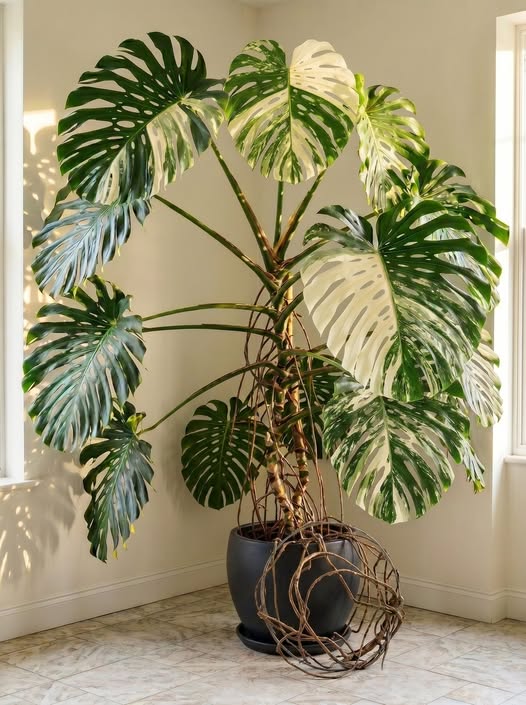
Monstera are big boys, reaching 6-8 feet indoors with broad leaves often exceeding 2 feet in length! Just imagine if the visible portion of this plant is this large; how large will the root system be? For this, the plant also needs a large pot.
Growing monstera in small pots leads to a scarcity of space and root boundings. Due to this, your plant will cease to grow. If you spot roots poking out of the drainage holes of the pot, repot into a container larger than the previous one. You can also try these things!
Note: Repot the monstera in spring to allow it to adjust to the new environment. Water the plant thoroughly to reduce transplant shock.
7. Support for Growth
monstera trellis
reddit
When Monstera plants reach colossal sizes, they need sturdy support. Without this support, the plant may flop over, damage its stems, and put unnecessary stress on its root system.
Any regular trellis suitable to the plant’s size, a moss pole, or a stake will do. Use zip ties and jute thread to train the plant. Moss poles also help mimic their natural climbing environment, offering humidity and something to grip as aerial roots grow.
If you need inspiration to make your plant look more beautiful with a creative trellis, check out our top picks for a DIY trellis!
8. Not Pruning Your Monstera
monstera pruning
Old, damaged, or overcrowded leaves can drain energy from the plant.
If you think that leaving monstera leaves alone, even if they are old, spent, clearly damaged, or infested, will not stop the plant’s growth, spoiler: you’re wrong. In fact, overgrown leaves should also be pruned to channel the energy.
For pruning, just take a pair of sterile shears or scissors and cut away the faulty foliage portions. Next, snip away leggy or older growth right above nodes.
9. Not Cleaning the Plant
monstera clean leaves
Sometimes the silent killer lies right on the plant as a layer of dust! How so? Well, debris or residue on leaves can clog up stomata and also interfere with the photosynthesis process. Plants kept near open windows tend to be victims of this.
Since monsteras have broad, fenestrated leaves, they catch dust easily. Wipe it off using a damp cloth regularly. Do not leave excess water on the leaves, as this invites fungal infections and leaves calcium residue on the foliage. Here’s another hack you can try!
10. Panicking and Stressing the Plant
monstera repotting
You need to understand that your monstera needs a break every now and then. That is why it reduces growth in its dormant period, which lasts during colder months. Do not unnecessarily increase fertilization, watering, or humidity during this time.
Repotting or transplanting can also lead to shock, in which the plant freezes up and doesn’t grow as usual. As it adjusts to its new environment, it will start growing again. During this time, patience is key.
With the right care and attention, your monstera will be back to putting out fresh, fenestrated leaves in no time. Just stay consistent and let the plant do the rest!
ADVERTISEMENT

