
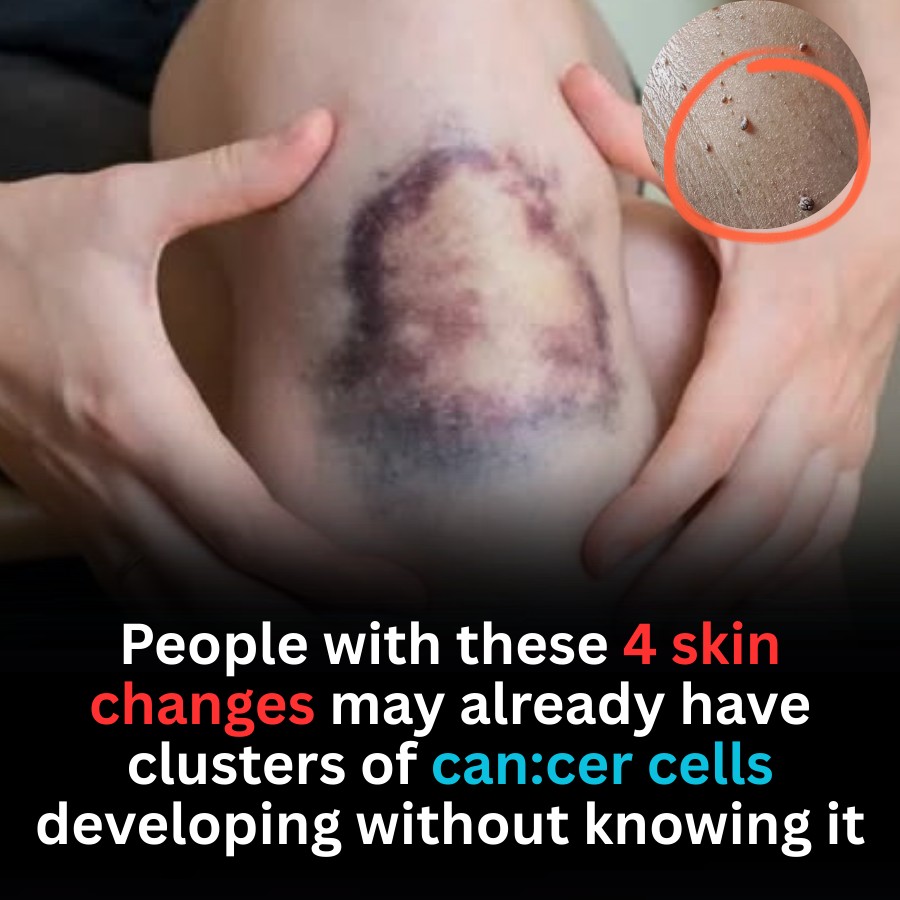
4 Skin Changes That Can Signal an Underlying Health Problem
(And when to get them checked)
Our skin is the body’s largest organ, and sometimes it reflects what’s happening inside. While most skin changes are harmless and linked to things like allergies, stress, or hormones, certain persistent or unusual changes may signal an underlying medical condition, including—rarely—cancer.
This article is not meant to diagnose, but to help you recognize when something deserves medical attention.
1. New or Changing Moles That Don’t Heal
Moles are common and usually harmless. However, a mole that:
Changes in size, shape, or color
Has uneven borders
Becomes itchy, painful, or starts bleeding
Looks very different from your other moles
should be checked by a healthcare professional. These changes can sometimes be linked to skin cancers, especially if they continue over time.
Tip: Doctors often use the “ABCDE” guide (Asymmetry, Border, Color, Diameter, Evolving) to evaluate moles.
2. Yellowing of the Skin or Eyes
A yellow tint to the skin or the whites of the eyes can indicate jaundice, which happens when the liver isn’t processing bilirubin properly.
Possible causes include:
Liver conditions
Gallbladder issues
Certain cancers affecting the liver or pancreas
If yellowing appears suddenly or worsens, medical evaluation is important.
3. Persistent Itching or Dark Patches Without a Clear Cause
Occasional itching is normal. But ongoing, intense itching or unexplained darkened skin patches—especially around the neck, underarms, or groin—can sometimes be linked to internal conditions.
In rare cases, these signs are associated with hormonal changes or internal tumors, but they are far more commonly caused by non-serious conditions like eczema or insulin resistance.
4. Sores or Spots That Don’t Heal
Cuts and blemishes usually heal within a few weeks. A sore that:
Doesn’t heal after several weeks
Keeps reopening
Looks scaly, crusted, or inflamed
should be examined by a doctor. Long-lasting skin lesions can occasionally be linked to skin cancers or immune system issues.
When Should You See a Doctor?
You should consider getting medical advice if a skin change:
Persists longer than a month
ADVERTISEMENT
