
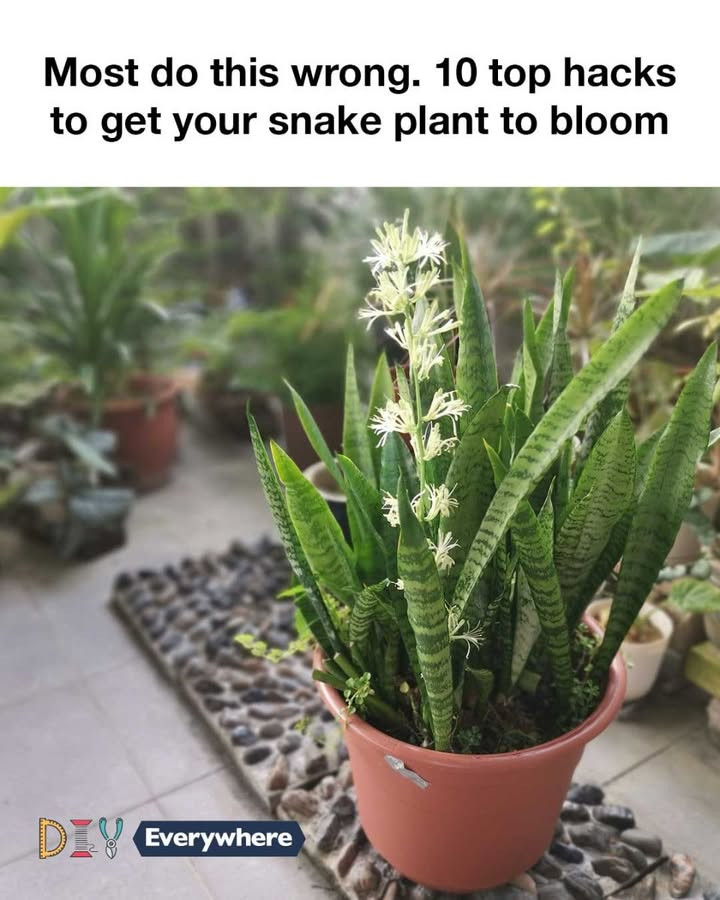
Snake plants, also known as Sansevieria or Dracaena trifasciata, are popular for their hardy nature and striking appearance. However, many plant enthusiasts are unaware that these resilient plants can produce beautiful, fragrant flowers under the right conditions. Blooming is a rare event for snake plants, often occurring when the plant is slightly stressed. This article will explore the top 10 hacks to encourage your snake plant to bloom, transforming it from a simple foliage plant into a flowering spectacle.
Understanding the Snake Plant’s Natural Habitat
Snake plants are native to West Africa, where they thrive in dry, rocky conditions. They are accustomed to periods of drought followed by heavy rains, which influences their growth and blooming patterns. Understanding this natural habitat is crucial for recreating the ideal conditions for blooming in your home. By mimicking these environmental factors, you can encourage your snake plant to produce its elusive flowers.
Advertisement
Hack 1: Optimizing Light Conditions
While snake plants are known for their ability to tolerate low light, they require bright, indirect sunlight to bloom. Position your plant near a window where it can receive plenty of light without being exposed to direct sun, which can scorch the leaves. If natural light is insufficient, consider using a grow light to supplement the plant’s needs.
Hack 2: Maintaining Ideal Temperature
Snake plants prefer warm temperatures, ideally between 70°F to 90°F (21°C to 32°C). To encourage blooming, avoid exposing the plant to temperatures below 50°F (10°C). During colder months, keep the plant away from drafts and cold windows to maintain a stable, warm environment.
Hack 3: Watering Techniques for Blooming
Proper watering is crucial for encouraging snake plants to bloom. Allow the soil to dry out completely between waterings to mimic their natural drought conditions. Overwatering can lead to root rot, which inhibits blooming. During the growing season, water the plant thoroughly but infrequently, reducing watering in the winter months.
ADVERTISEMENT
