
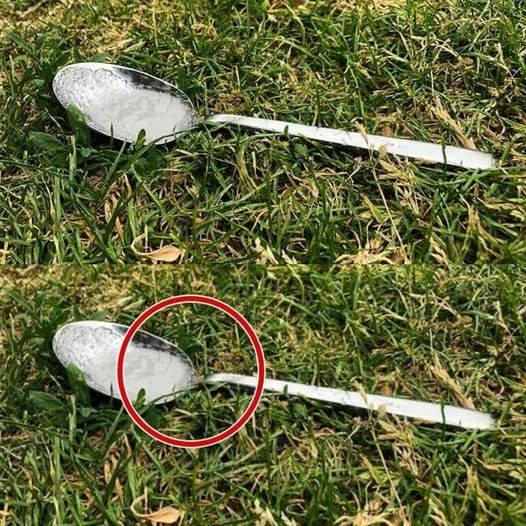
Always Put a Spoon of Sugar in Your Backyard Before Leaving the House — Here’s Why
Every so often, a simple idea spreads across the internet and captures everyone’s attention. One of the most viral eco-friendly tips to resurface again and again is this:
“Put a spoonful of sugar in your backyard to help save the bees.”
It’s a heartwarming idea—but also one that’s often misunderstood.
While bees do play a crucial role in pollinating our food and flowers, and while they can become tired or dehydrated, experts clarify that we shouldn’t routinely leave sugar water outside.
So what’s the truth behind the viral advice? Why do people swear by it? And when is it actually helpful?
Let’s break it down.
The Good Intention Behind the Sugar Spoon Tip
The idea originally took off because many people don’t realize how vital pollinators are—and how much they struggle in modern environments.
Bees face challenges such as:
Habitat loss
Pesticide exposure
Loss of wildflowers
Extreme heat
Drought
Seeing a sluggish or exhausted bee on the ground can make people want to help, and the sugar trick was promoted as a way to “revive” tired bees.
And in rare, specific cases, a tiny amount of sugar water can help a single exhausted bee regain enough energy to fly away.
But that’s not the full story.
Why You Shouldn’t Regularly Leave Sugar Outdoors
Experts, including beekeepers and conservation groups, caution against leaving sugar water outside every day.
Here’s why:
1. Sugar Water Can Attract Pests
Ants, wasps, raccoons, and other animals are quickly drawn to sugary mixtures.
2. Sugar Doesn’t Provide Nutrition
Unlike nectar, sugar water has no vitamins, minerals, or beneficial compounds—it’s basically fast energy without nourishment.
3. It Can Distract Bees From Real Flowers
If bees find an easy sugar source, they may ignore real flowers that help support entire ecosystems.
4. It Can Spread Disease Between Bees
Shared feeders—just like shared bird feeders—can help pathogens spread if many bees drink from the same spot.
When Sugar Water Is Helpful
You can offer a tiny amount of sugar water only when you find a single bee that appears weak, stranded, or struggling to fly.
How to Do It Safely
Mix 1 teaspoon of sugar with 2 teaspoons of water.
Place the mixture near the bee on a spoon or leaf.
Let the bee drink and fly away on its own.
Remove the sugar water afterwards.
This small act can help a tired bee in a critical moment—without creating long-term risks.
The Best Thing You Can Do for Bees Instead
If you want a safe, long-lasting way to support pollinators, here are expert-approved alternatives:
1. Plant Bee-Friendly Flowers
Choose nectar-rich plants such as:
Lavender
Coneflower
Sunflowers
Bee balm
Wildflowers
Herbs like thyme, rosemary, and mint
2. Provide Fresh, Clean Water
A shallow dish with stones for bees to land on is perfect.
ADVERTISEMENT
