
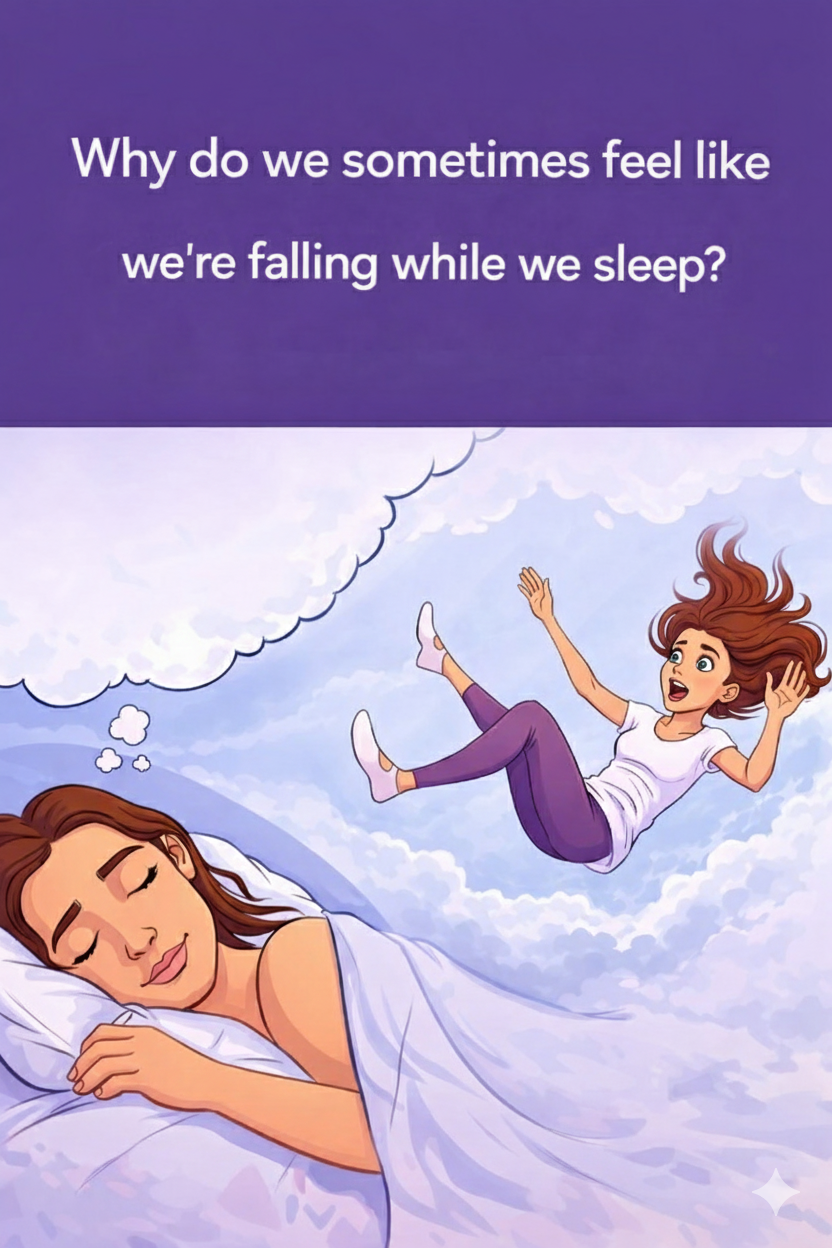
If Your Body Suddenly Jerks While You’re Falling Asleep, Here’s What It Means
You’re just drifting off to sleep when suddenly—
your leg kicks, your arm jumps, or your whole body jerks awake.
It can feel strange, confusing, or even a little alarming. Some people worry something is wrong with them. But the truth is much simpler—and surprisingly common.
It’s Called a Hypnic Jerk
That sudden movement is known as a hypnic jerk (also called a sleep start). It happens during the transition between being awake and falling asleep.
And here’s the key thing to know:
It’s normal.
Up to 70% of people experience hypnic jerks at some point in their lives.
Why Does It Happen?
As your body falls asleep, your muscles begin to relax and your breathing slows. Sometimes, your brain briefly misinterprets this relaxation as falling or losing balance.
So it reacts quickly—
sending a signal to your muscles to tighten.
That reaction causes the sudden jerk.
Common Triggers
Hypnic jerks are more likely to happen when:
You’re overtired
You’ve had caffeine late in the day
You’re feeling stressed or anxious
You exercised right before bed
Your sleep schedule is irregular
They can also happen more often during periods of growth or hormonal changes, which makes them especially common in teens.
Is It Dangerous?
No.
Hypnic jerks are harmless and not a sign of a serious medical condition.
They don’t damage your body, and they don’t mean you’re developing a sleep disorder.
They’re simply your nervous system misfiring for a moment as it powers down.
Why It Can Feel So Intense
Sometimes hypnic jerks are paired with:
A feeling of falling
A quick dream or image
A racing heartbeat
That’s because your brain is briefly switching between wakefulness and sleep. The overlap can make the experience feel stronger than it actually is.
How to Reduce Them
If they happen often and bother you, these tips may help:
Stick to a regular sleep schedule
Avoid caffeine in the evening
Wind down before bed (no intense screens or workouts)
Practice calm breathing or relaxation
Make sure you’re getting enough sleep
When to Talk to Someone
ADVERTISEMENT
