
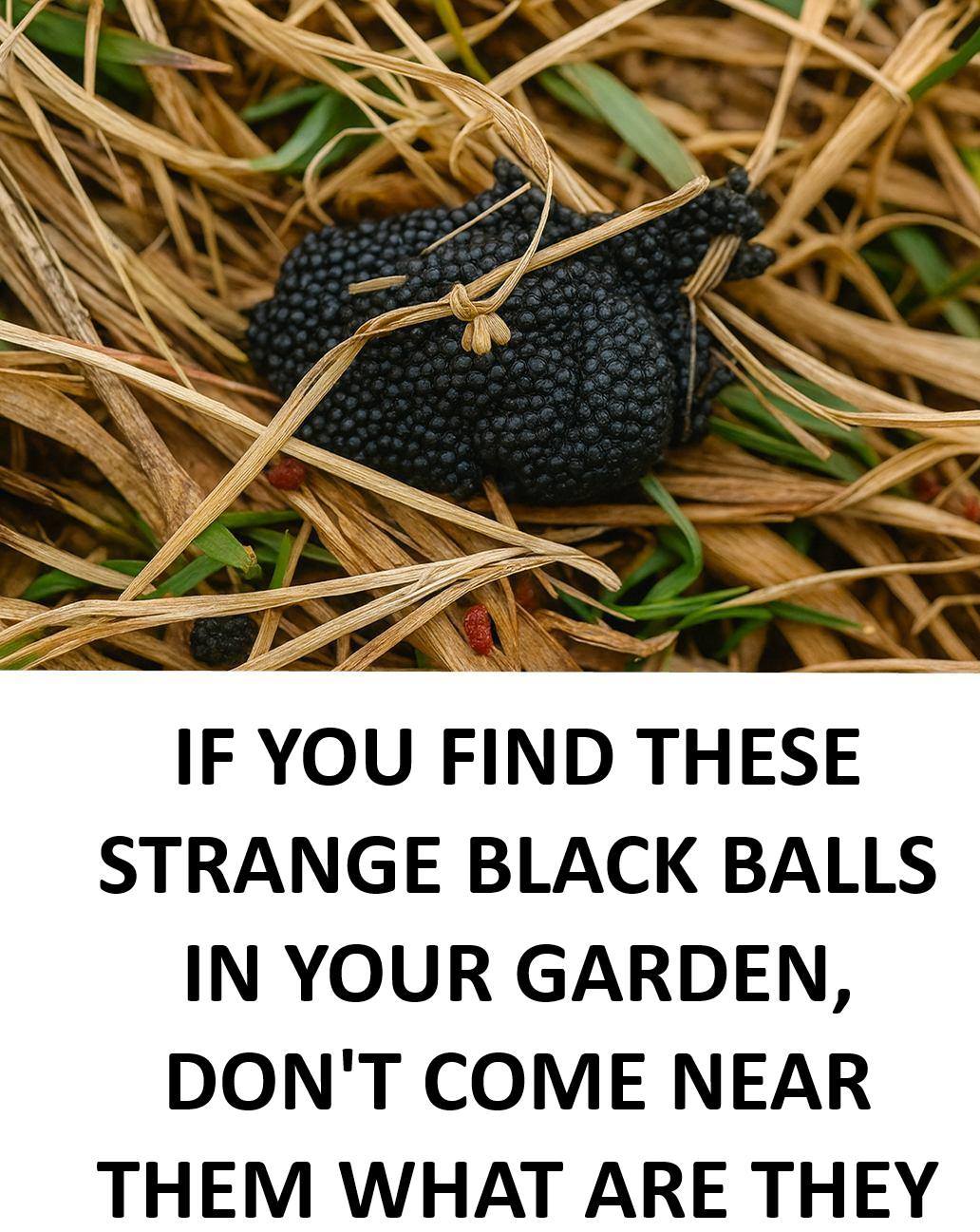
What to Do If You Find Strange Black Balls in Your Garden: What They Really Are
Have you ever walked into your garden after rain and noticed strange black balls scattered across the soil, grass, or mulch? They may look alarming at first—almost like animal droppings, burnt berries, or even something moldy. Before you panic or throw them away, it’s important to know what they actually are.
In most cases, these mysterious black balls are harmless natural organisms, and they’re more common than you might think.
What Are the Black Balls?
The most common explanation is slime mold, especially a type known as dog vomit slime mold or black slime mold. Despite the unpleasant names, slime molds are not dangerous, not toxic, and not a sign that your garden is unhealthy.
Slime molds are simple organisms that thrive in moist, shaded areas, especially after rain. They often appear on:
Mulch or wood chips
Damp soil
Lawns
Decaying plant material
When slime mold matures, it can form small black or dark brown round balls, clusters, or blobs that seem to appear overnight.
Are They Harmful?
The good news: no.
These black balls:
Do not harm plants
Are not dangerous to people or pets
Do not damage soil quality
They feed on bacteria and organic matter, which actually makes them part of nature’s cleanup system.
Why Did They Appear Suddenly?
Slime molds and similar fungi often show up when conditions are just right:
High humidity
Recent rainfall
Warm temperatures
Organic material like mulch or leaves
They can seem to “appear out of nowhere,” but they’ve usually been developing unnoticed below the surface.
What Should You Do If You Find Them?
You have a few simple options:
ADVERTISEMENT
