
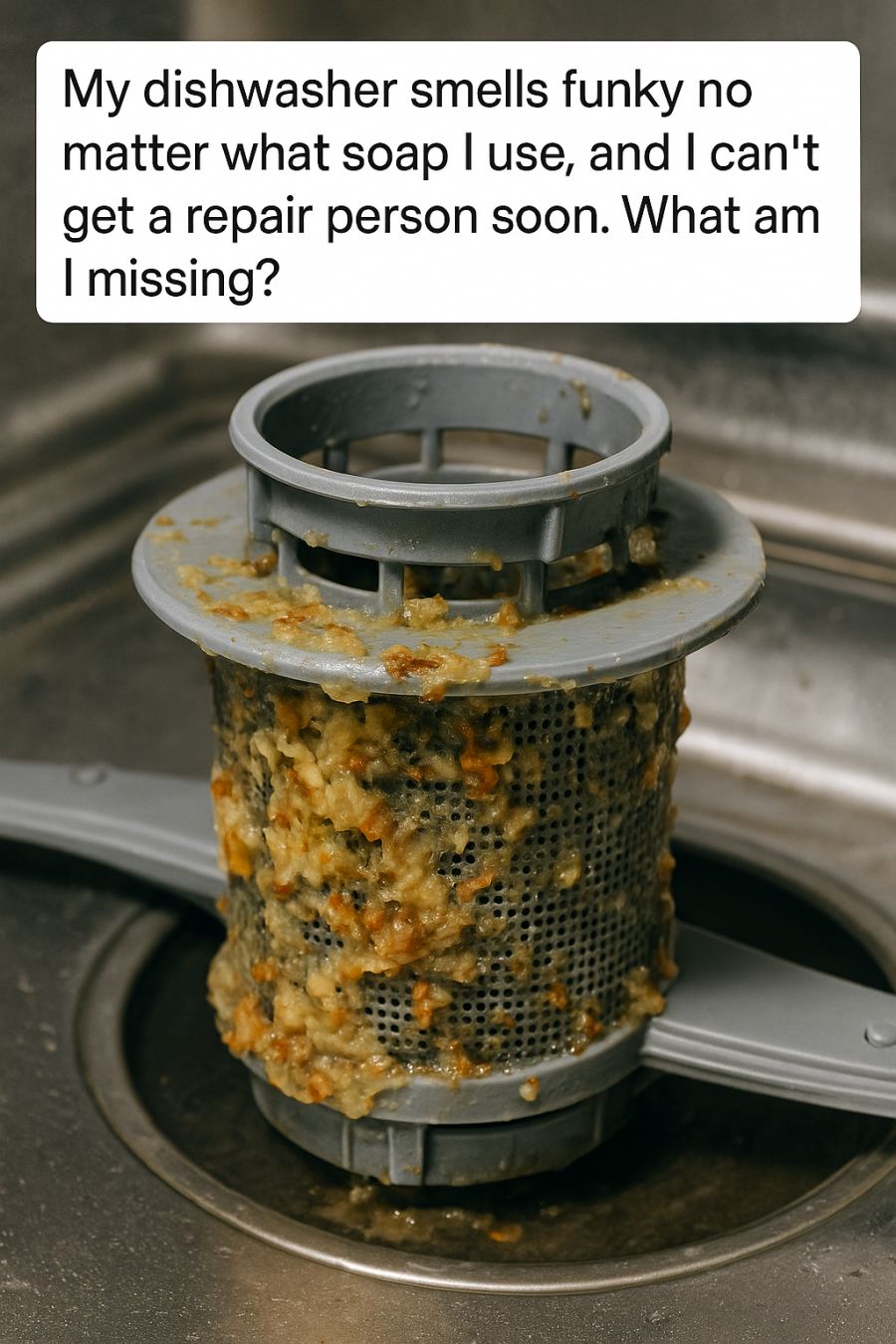
My Dishwasher Smells Funky No Matter What Soap I Use: Here’s What You’re Missing
It’s frustrating: you run your dishwasher, expecting sparkling clean dishes, but instead, a funky smell lingers in the appliance. You’ve tried different detergents, maybe even run cleaning cycles, but nothing works. Before you wait for a repair person, there are some common culprits you might be missing. Let’s break down why your dishwasher smells and how to fix it effectively.
Why Your Dishwasher Smells
A dishwasher is more than just a soap-and-water machine. It’s a mini ecosystem that can trap food particles, grease, and moisture—all of which can cause unpleasant odors. Common reasons for a smelly dishwasher include:
Food Debris Caught in the Filter or Drain
Even tiny bits of food that get stuck in the filter, drain, or spray arms can start to rot and create a smell. Dishwashers need regular cleaning of these areas.
Clogged or Dirty Drain Hose
If water isn’t draining properly, stagnant water can sit in the hose, creating bacteria and odors.
Dirty Spray Arms
Food or mineral buildup in the spray arms prevents proper water circulation and can trap odors.
Gasket or Seal Mildew
The rubber seals around the dishwasher door can develop mildew or mold if water gets trapped.
Standing Water
If the dishwasher doesn’t completely drain, leftover water can become a breeding ground for bacteria and cause that “funky” smell.
Soap Scum or Hard Water Deposits
Residue from detergent and minerals in hard water can accumulate on the dishwasher walls, leaving an unpleasant smell.
Steps to Fix a Funky Dishwasher
Even if a repair person isn’t available, you can tackle the problem yourself. Here’s a step-by-step guide:
1. Clean the Filter
Most dishwashers have a removable filter at the bottom. Remove it and rinse under hot water, scrubbing with a soft brush if needed. Make sure there’s no trapped food debris.
2. Check and Clean the Drain
Look for any clogs in the drain or the bottom of the dishwasher. Remove any debris you see. For stubborn clogs, a mixture of baking soda and vinegar can help break it down. Pour 1 cup of baking soda followed by 1 cup of white vinegar into the drain, let it fizz for 10–15 minutes, then run a hot water cycle.
3. Clean the Spray Arms
Remove the spray arms (consult your manual if necessary) and rinse them under water. Use a toothpick or small brush to clear any holes blocked by debris.
4. Wipe the Door Gasket
Use a damp cloth with mild dish soap or a vinegar-water solution to wipe the rubber gasket around the door. Pay attention to folds and crevices where mildew can hide.
5. Run a Cleaning Cycle
If your dishwasher has a self-cleaning cycle, use it with either dishwasher cleaner tablets or white vinegar. Place a cup of vinegar in a dishwasher-safe container on the top rack and run a hot water cycle. For extra deodorizing, sprinkle a cup of baking soda on the bottom of the dishwasher and run a short hot cycle afterward.
6. Check the Drain Hose
If you suspect standing water in the hose, carefully inspect it for kinks or clogs. Sometimes running hot water through the sink drain connected to the dishwasher helps flush out debris.
7. Keep It Dry Between Uses
ADVERTISEMENT
