
Continued on next page…
The timing of watering can significantly impact the health of your tomato plants. The best time to water is early in the morning, before the sun becomes too intense. This allows the water to soak into the soil and reach the roots before it evaporates.
Watering in the evening can also be effective, but it carries the risk of leaving the plants damp overnight, which can promote fungal diseases. If you choose to water in the evening, ensure that the foliage has time to dry before nightfall.
5. The Right Technique: Watering at the Base
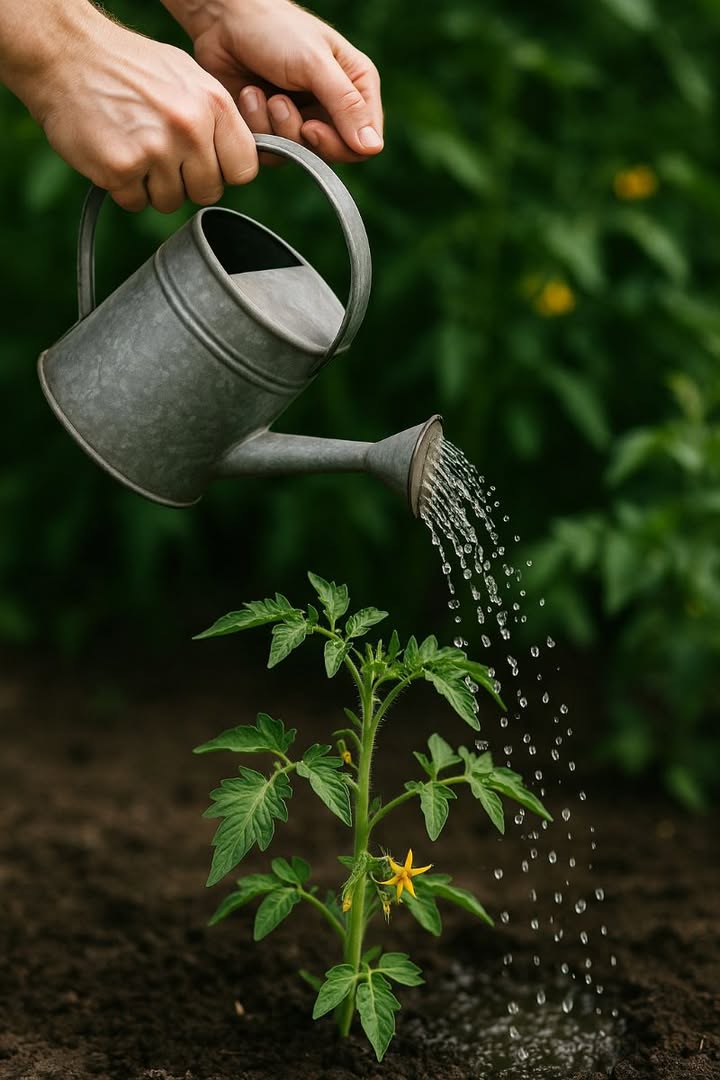
Watering at the base of the plant is crucial for ensuring that the roots receive the moisture they need. Avoid wetting the foliage, as this can lead to fungal diseases such as blight. Use a watering can with a long spout or a hose with a nozzle to direct the water to the base of the plant.
By focusing on the root zone, you can ensure that the water penetrates deeply into the soil, encouraging strong root development. This method also reduces water waste and helps prevent the spread of disease.
6. Avoiding Common Mistakes: Overhead Watering
Overhead watering, such as using a sprinkler, can be detrimental to tomato plants. It wets the foliage, increasing the risk of fungal diseases like early blight and powdery mildew. Additionally, much of the water may evaporate before it reaches the roots, leading to inefficient watering.
Instead, use methods that deliver water directly to the soil, such as drip irrigation or soaker hoses. These techniques ensure that the water reaches the roots where it’s needed most, reducing the risk of disease and conserving water.
7. The Role of Mulching in Water Retention
Mulching is an effective way to retain soil moisture and reduce the need for frequent watering. A layer of organic mulch, such as straw, wood chips, or grass clippings, helps to insulate the soil, keeping it cool and moist.
Apply a 2 to 3-inch layer of mulch around the base of the tomato plants, being careful not to pile it against the stems. This will help prevent evaporation, suppress weeds, and maintain a consistent soil temperature, all of which contribute to healthier plants.
8. Signs of Overwatering and Underwatering
Recognizing the signs of overwatering and underwatering is crucial for maintaining healthy tomato plants. Overwatered plants may exhibit yellowing leaves, wilting, and root rot. The soil may also appear constantly wet or soggy.
Underwatered plants, on the other hand, may have dry, brittle leaves and stunted growth. The soil will feel dry to the touch, and the plants may wilt during the hottest part of the day. Adjust your watering practices based on these signs to ensure your plants receive the right amount of moisture.
9. Debunking Viral Watering Hacks
ADVERTISEMENT
