
Continued on next page…
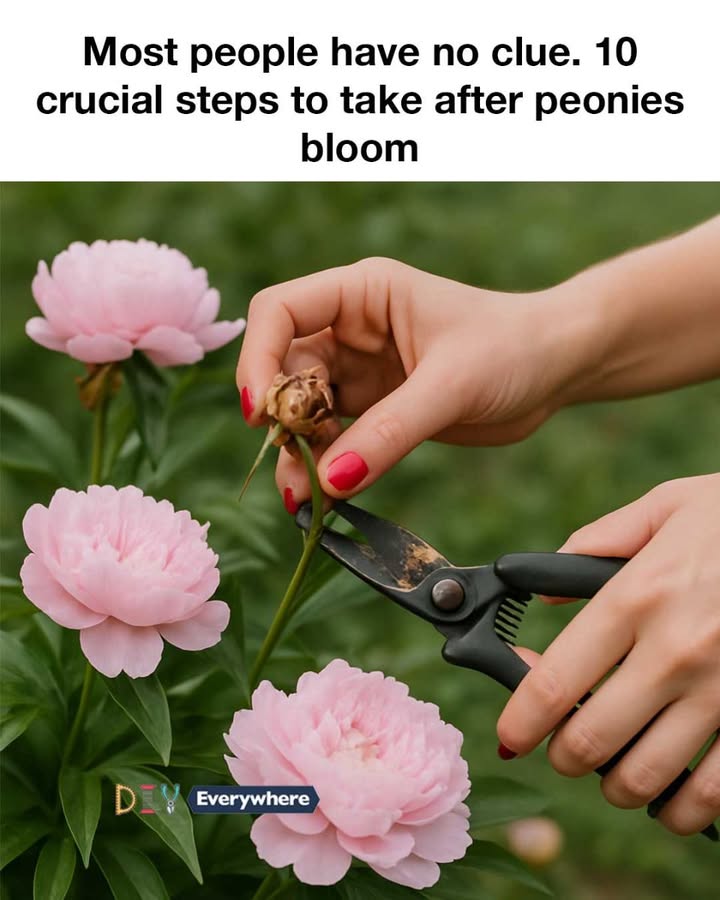
Deadheading is the process of removing spent blooms from the plant. This step is crucial because it prevents the plant from expending energy on seed production, redirecting it towards root and foliage development. To deadhead peonies, use a pair of clean, sharp scissors or pruning shears to cut the flower stem just above the first set of healthy leaves. This encourages the plant to focus on strengthening itself for the next growing season.
3. Fertilizing for Future Blooms
After the peonies have finished blooming, it’s an ideal time to fertilize them to promote healthy growth and prepare for next year’s blooms. Use a balanced, slow-release fertilizer, such as a 10-10-10 formula, applying it at a rate of about 1/4 cup per plant. Spread the fertilizer evenly around the base of the plant, being careful not to let it come into direct contact with the stems. Water the area thoroughly to help the nutrients penetrate the soil.
4. Watering Wisely: Post-Bloom Care
Proper watering is essential after peonies bloom to ensure they remain healthy and vigorous. Peonies require about 1 inch of water per week, either from rainfall or supplemental watering. Water deeply and infrequently to encourage deep root growth, which helps the plant withstand periods of drought. Avoid overhead watering, as wet foliage can lead to fungal diseases. Instead, water at the base of the plant early in the morning to allow the leaves to dry quickly.
5. Pruning: When and How to Do It
Pruning peonies after they bloom is an important step in maintaining their health and appearance. Once the blooms have faded, remove any dead or damaged stems to improve air circulation and reduce the risk of disease. In the fall, after the first frost, cut back the foliage to about 2 inches above the ground. This helps prevent diseases from overwintering in the plant debris and encourages healthy growth in the spring.
6. Pest and Disease Management
Peonies can be susceptible to pests such as aphids and diseases like botrytis blight. After blooming, inspect your plants regularly for signs of infestation or disease. Remove any affected foliage and dispose of it properly. For pest control, consider using insecticidal soap or neem oil, following the manufacturer’s instructions. To prevent disease, ensure good air circulation around the plants and avoid overhead watering.
7. Mulching for Moisture Retention
Applying a layer of mulch around your peonies after they bloom can help retain soil moisture and regulate temperature. Use organic mulch, such as shredded bark or straw, and apply it to a depth of about 2 to 3 inches. Be sure to keep the mulch a few inches away from the base of the plant to prevent rot and pest issues. Mulching also helps suppress weeds, reducing competition for nutrients and water.
8. Dividing Peonies: When It’s Necessary
Dividing peonies is not always necessary, but it can be beneficial if your plants have become overcrowded or are not blooming as vigorously. The best time to divide peonies is in the fall, after the foliage has died back. Carefully dig up the plant and use a sharp knife to divide the root clump into sections, each with at least 3 to 5 eyes (buds). Replant the divisions at the same depth they were growing before, and water them well to help them establish.
9. Preparing Peonies for Winter
ADVERTISEMENT
