
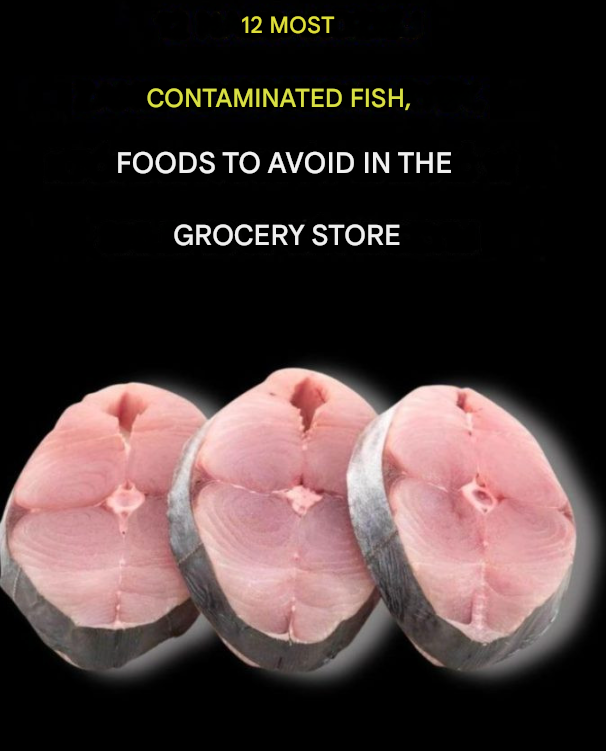
Why Some Fish Are More Contaminated
Fish absorb substances from the water they live in and from the food they eat. Larger, longer-living fish tend to accumulate more contaminants over time, especially substances like mercury and industrial pollutants. Farmed fish may also be exposed to chemicals or antibiotics if not raised under strict standards.
Fish Often Linked to Higher Contamination Levels
The following fish are commonly mentioned by health and environmental groups as being more likely to contain higher levels of contaminants:
Shark – Often high in mercury due to its long lifespan
Swordfish – A top predator that accumulates toxins
King Mackerel – Not the same as Atlantic mackerel; this type is much higher in mercury
Tilefish – Known for particularly high mercury levels
Bigeye Tuna – Larger tuna species tend to contain more contaminants
Marlin – A large predatory fish with higher toxin buildup
Orange Roughy – Lives very long and accumulates pollutants
Farmed Salmon (low-quality sources) – May contain pollutants depending on farming practices
Eel – Can absorb contaminants from polluted waters
Bluefish – Often higher in mercury than many other fish
Grouper – Sometimes mislabeled and may contain high toxin levels
Imported Catfish (unregulated sources) – Quality and safety vary widely by source
This does not mean these fish are immediately dangerous, but frequent consumption may increase exposure to harmful substances over time.
Why This Matters
Long-term exposure to contaminants can affect concentration, energy levels, and overall well-being. Young people, in particular, benefit from being cautious about repeated exposure, since their bodies are still developing.
Safer Fish Choices
Many fish are generally considered lower in contaminants, especially smaller fish that grow quickly. These often include sardines, anchovies, salmon from trusted sources, and trout. Choosing a variety of fish rather than eating the same type repeatedly can also help reduce risk.
Tips for Smarter Grocery Shopping
Check labels for origin and fishing method
Avoid eating large predatory fish too often
Choose fish from reputable suppliers
Balance fish meals with other healthy protein sources
ADVERTISEMENT
