
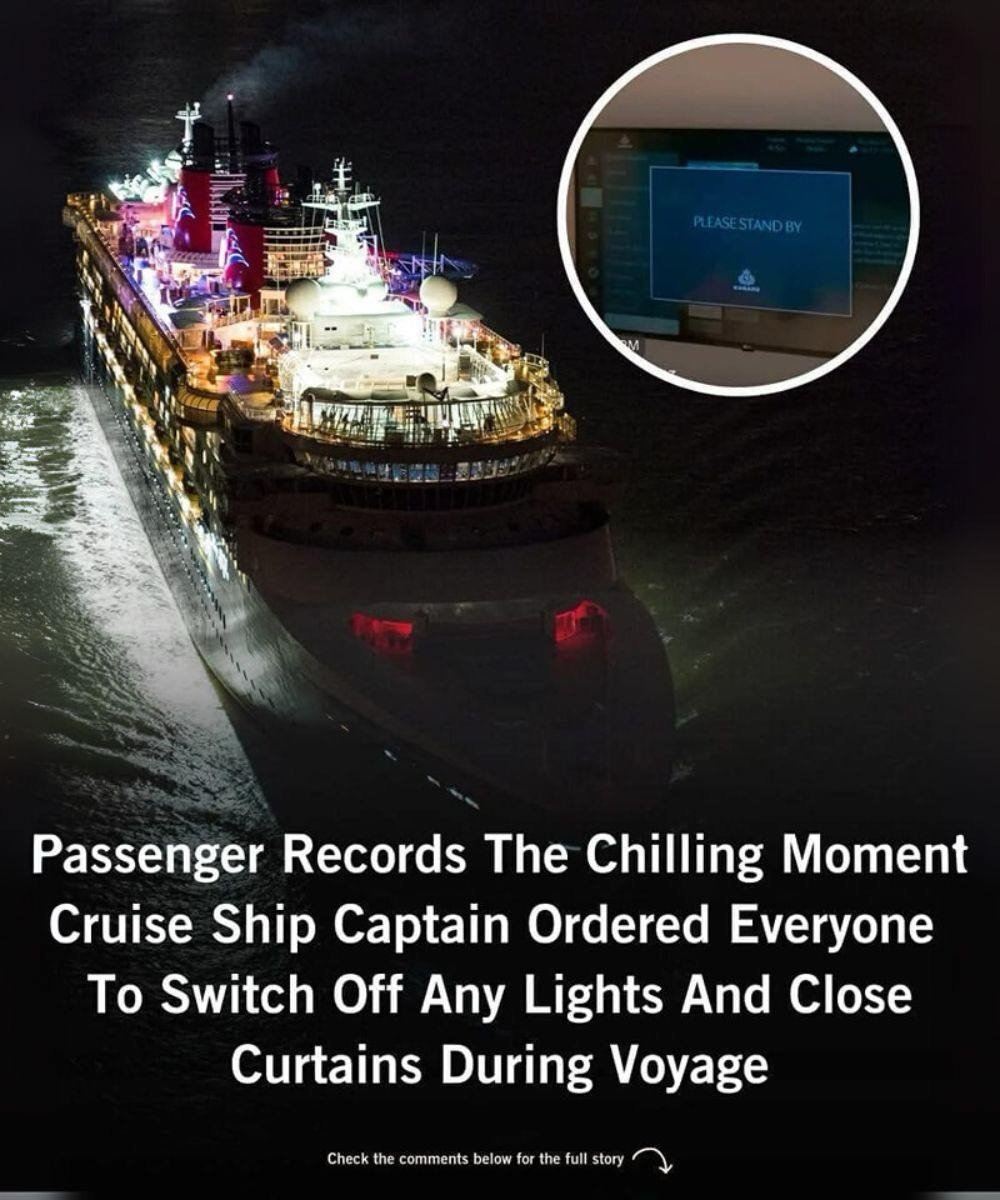
If you’ve ever cruised through remote or environmentally sensitive waters, you may have heard a calm announcement after sunset asking passengers to turn off balcony lights and close their curtains. The request often sounds routine, even optional. But behind this quiet instruction lies a mix of environmental protection, maritime safety, and, in some regions, very real security concerns.
While it may seem like a small inconvenience, this simple action plays a critical role in protecting wildlife, reducing navigational risks, and keeping ships and passengers safe.
1. Protecting Marine Wildlife From Light Pollution
One of the most important reasons cruise lines enforce blackout measures is to reduce light pollution, which can seriously disrupt marine ecosystems.
Many sea animals rely on natural light cues from the moon and stars to survive. Artificial lighting from large ships can interfere with these cues in several ways:
Sea turtles, especially hatchlings, instinctively move toward moonlight reflecting on the ocean. Bright ship lights can disorient them, leading them away from the sea and into danger.
Seabirds can become confused by strong artificial lights, causing exhaustion or collisions with ships.
Plankton and fish behavior can be altered, disrupting the food chain and local biodiversity.
In environmentally protected areas, such as parts of the Caribbean, the Mediterranean, Alaska, or near coral reefs, cruise ships are often required by law to minimize exterior lighting at night.
2. Navigational Safety in Narrow or Dangerous Waters
Cruise ships are essentially floating cities, and their lights can interfere with navigation visibility, especially in narrow straits or busy shipping lanes.
In certain waters:
Excessive lighting can reflect off the water, reducing the bridge crew’s ability to see smaller vessels, buoys, or hazards.
Glare from passenger cabins can interfere with night-vision equipment used by the crew.
Reduced lighting allows officers to better detect unlit boats, floating debris, or unexpected obstacles.
By asking passengers to darken their cabins, cruise lines help ensure the crew has the clearest possible view during critical nighttime navigation.
3. Security and Anti-Piracy Measures
The most unsettling reason behind the request applies to specific regions of the world where maritime security risks still exist.
In certain high-risk areas, ships follow a practice known as “low visibility” or “dark ship” protocols:
Turning off unnecessary lights makes the ship less visible from a distance.
It reduces the chance of attracting unwanted attention.
Darkened cabins prevent silhouettes from being visible through windows, which could otherwise reveal passenger activity or ship layout.
While modern piracy incidents are rare and cruise ships are well-protected, these precautions are part of international maritime safety procedures designed to reduce risk even further.
4. Compliance With International and Local Regulations
Many coastal nations enforce strict nighttime lighting rules to protect wildlife and maintain safe maritime traffic. Cruise lines must comply with:
Environmental protection laws
Port authority regulations
International maritime safety standards
Failure to follow these rules can result in fines, restricted access to ports, or legal penalties. Asking passengers to cooperate is often the simplest way for cruise lines to stay compliant.
5. Energy Conservation and Sustainability Efforts
Though not the primary reason, turning off lights also supports energy efficiency goals.
Cruise lines consume vast amounts of power daily. Reducing unnecessary lighting:
Lowers fuel consumption
Reduces emissions
Supports broader sustainability commitments many cruise companies have made
When thousands of passengers participate, the impact becomes significant.
Why the Request Is Often Downplayed
ADVERTISEMENT
