
ADVERTISEMENT
ADVERTISEMENT
You’re doing it all wrong. Here’s the right way to fertilize hydrangeas for bigger blooms
You can use a soil pH test kit, available at most garden centers, to measure your soil’s acidity or alkalinity. Adjusting the pH can be done by adding lime to raise it or sulfur to lower it, but these changes should be made gradually and monitored regularly.
3. Timing Your Fertilization
Timing is everything when it comes to fertilizing hydrangeas. The best time to fertilize is in early spring, just as the plants are beginning to leaf out. This timing ensures that the nutrients are available when the plants need them most for growth and bloom production.
A second application can be made in early summer, but avoid fertilizing after August as this can encourage new growth that may not harden off before winter, leading to damage.
4. Choosing the Right Fertilizer
Selecting the right fertilizer is crucial for promoting healthy growth and abundant blooms. A balanced, slow-release fertilizer with an N-P-K ratio of 10-10-10 or 12-4-8 is generally recommended for hydrangeas.
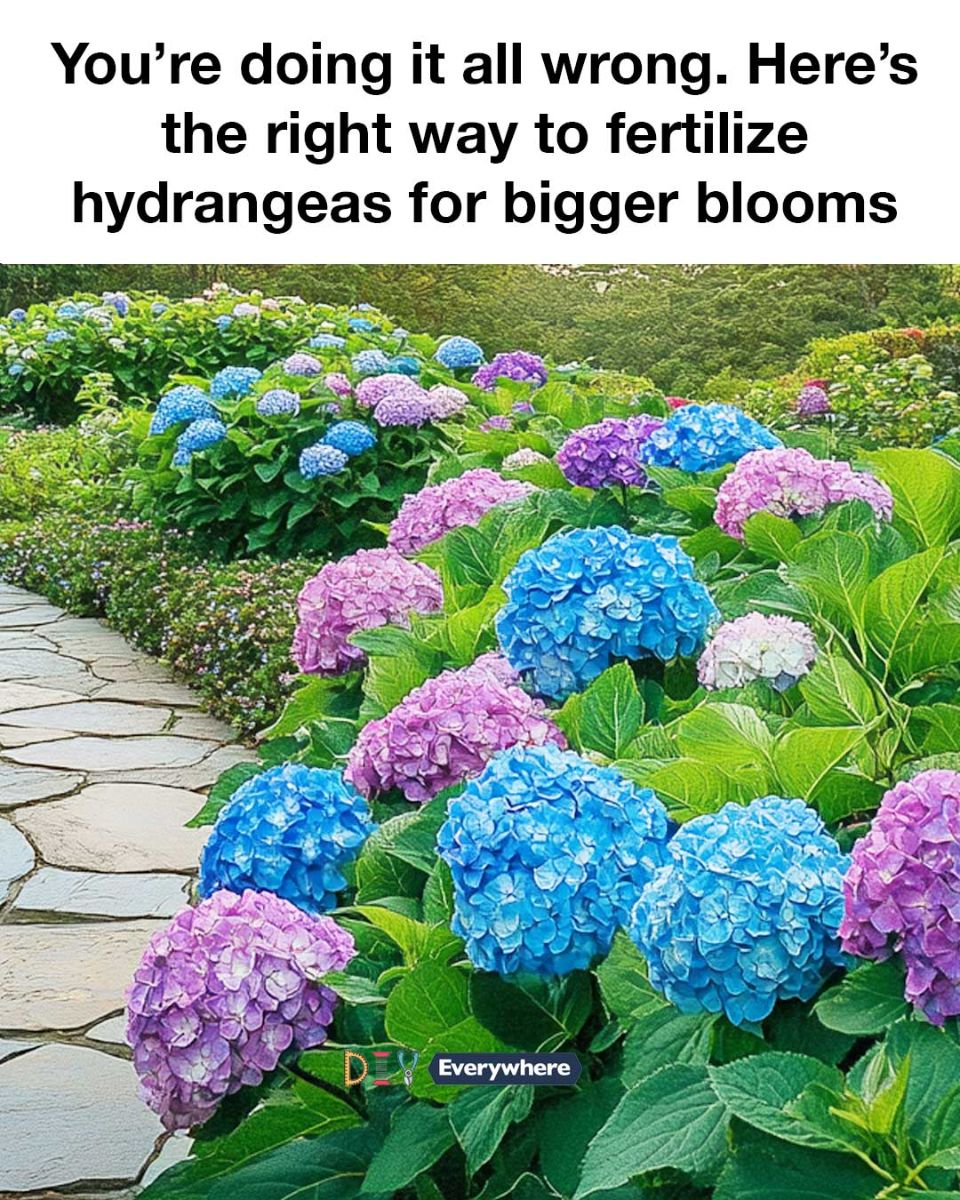
For those looking to enhance bloom color, specific fertilizers that adjust soil pH can be used. For instance, aluminum sulfate can be added to encourage blue blooms, while superphosphate can help maintain pink hues.
5. How to Apply Fertilizer Correctly
ADVERTISEMENT
