
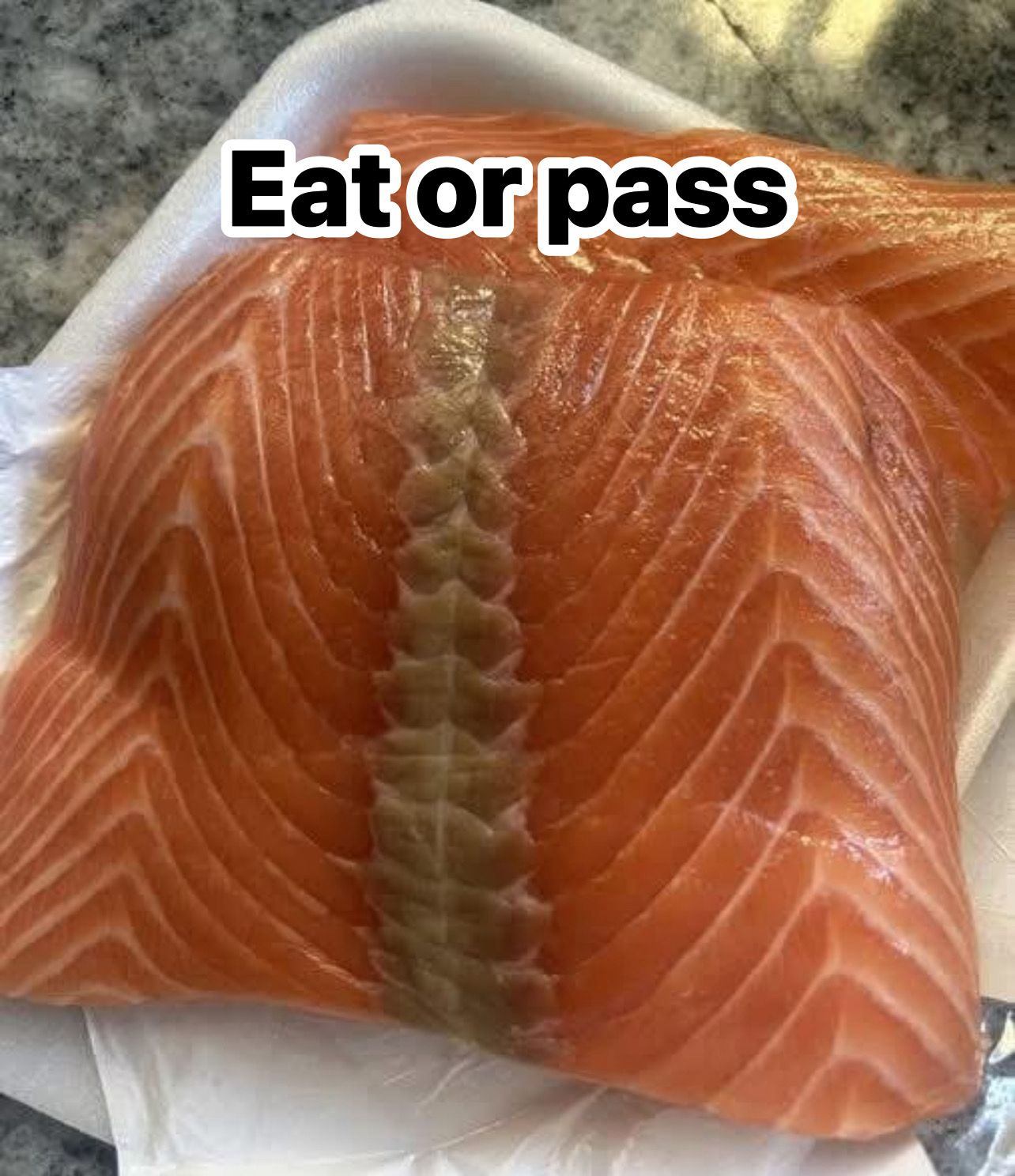
What Is This Green Stuff on My Salmon (Before Cooking)?
If you’ve ever unpacked fresh salmon and noticed a greenish area on the surface, you’re not alone — and yes, it can be unsettling at first glance. Before tossing it out or panicking, it helps to understand what you’re actually seeing and whether the salmon is still safe to cook.
The Most Common Reason: Natural Fat or Oxidation
In many cases, the green or grayish tint on raw salmon comes from oxidation or natural fat deposits. Salmon flesh contains healthy fats, and when exposed to air, light, or temperature changes, parts of the fish can appear slightly green, gray, or dull instead of bright pink.
This does not automatically mean the fish is spoiled.
Another Possibility: Bloodline or Muscle Pigment
Salmon have a darker strip of flesh called the bloodline, which can sometimes look greenish or brownish before cooking. This area is safe to eat, though some people trim it away because it has a stronger flavor.
When You Should Be Concerned
While some color variation is normal, you should avoid cooking the salmon if you notice:
A strong sour or rotten smell
Slimy texture that doesn’t rinse off
Mold-like spots (fuzzy or powdery)
Widespread discoloration paired with off odor
Fresh salmon should smell clean and mild, not fishy.
What Happens After Cooking?
Once cooked, salmon often changes color completely. Areas that looked dull or greenish before cooking usually turn opaque pink or pale orange when fully cooked — another sign that the discoloration was harmless.
How to Prepare Salmon Safely
ADVERTISEMENT
