
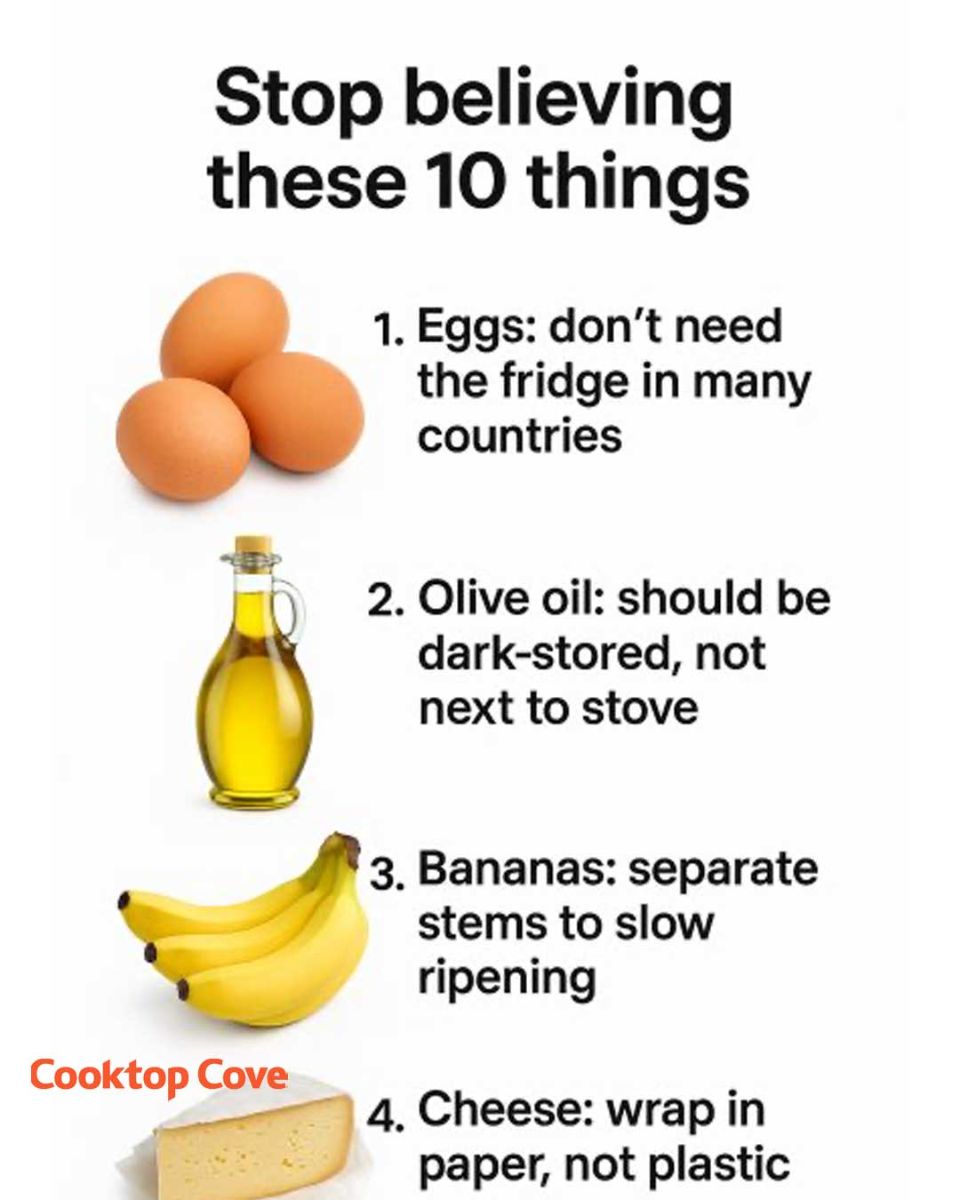
In our information-rich world, it is easy to fall for myths and misconceptions that have somehow managed to become accepted truths. While some myths are harmless, others can lead to wasted resources, inefficiencies, or even health concerns. The key is to question what we hear and seek out evidence-based answers.
In this article, we will debunk ten common beliefs that many people still hold onto. From food storage myths to health misconceptions, let’s explore why it’s time to stop believing these things and what the actual facts are.
1. Eggs Do Not Always Need Refrigeration
In many parts of the world, such as Europe, eggs are not refrigerated. This is because eggs have a natural protective coating called the cuticle that helps keep out bacteria. In the United States, eggs are washed to remove this coating, which necessitates refrigeration to prevent contamination. However, if you purchase farm-fresh eggs that have not been washed, they can be safely stored at room temperature for a week or more. Always check local guidelines and consider the source of your eggs before deciding where to store them.
2. Olive Oil Should Be Stored in the Dark
While it’s true that olive oil should be protected from light to prevent oxidation, it doesn’t necessarily require complete darkness. Olive oil should be stored in a cool, dark place, such as a pantry or a cupboard, away from direct sunlight and heat sources. The ideal storage temperature is between 57-70°F (14-21°C). Using dark-tinted bottles can also help protect olive oil from light exposure when stored on countertops.
3. Separate Banana Stems to Slow Ripening
The idea behind this myth is that separating bananas will slow down the release of ethylene gas, which is responsible for ripening. While there is some truth to ethylene’s role in ripening, separating bananas may not significantly impact the process. Instead, to slow ripening, consider storing bananas in a cool area and away from other fruits. Wrapping the stems in plastic wrap can also help reduce ethylene exposure, but the effect is minimal.
4. Cheese Should Be Wrapped in Paper, Not Plastic
Cheese is a living food that requires some degree of air exposure to maintain its texture and flavor. Wrapping cheese in breathable cheese paper or wax paper is preferable to plastic because it allows the cheese to ‘breathe’ while protecting it from excessive moisture loss. Plastic wrap can trap moisture and encourage mold growth, which can spoil the cheese. When storing cheese, ensure it is wrapped tightly and kept in the vegetable drawer of the refrigerator, where humidity levels are more suitable.
5. Myth: You Need to Drink Eight Glasses of Water a Day
The ‘eight glasses a day’ rule is a simplistic guideline that doesn’t account for individual variations in water needs. Factors such as body size, activity level, climate, and overall health influence how much water a person needs. Rather than adhering rigidly to a specific number, listen to your body’s signals and drink when you feel thirsty. The Institute of Medicine suggests a total daily water intake of about 3.7 liters (125 ounces) for men and 2.7 liters (91 ounces) for women from all beverages and foods.
For Complete Cooking STEPS Please Head On Over To Next Page Or Open button (>) and don’t forget to SHARE with your Facebook friends
ADVERTISEMENT

