
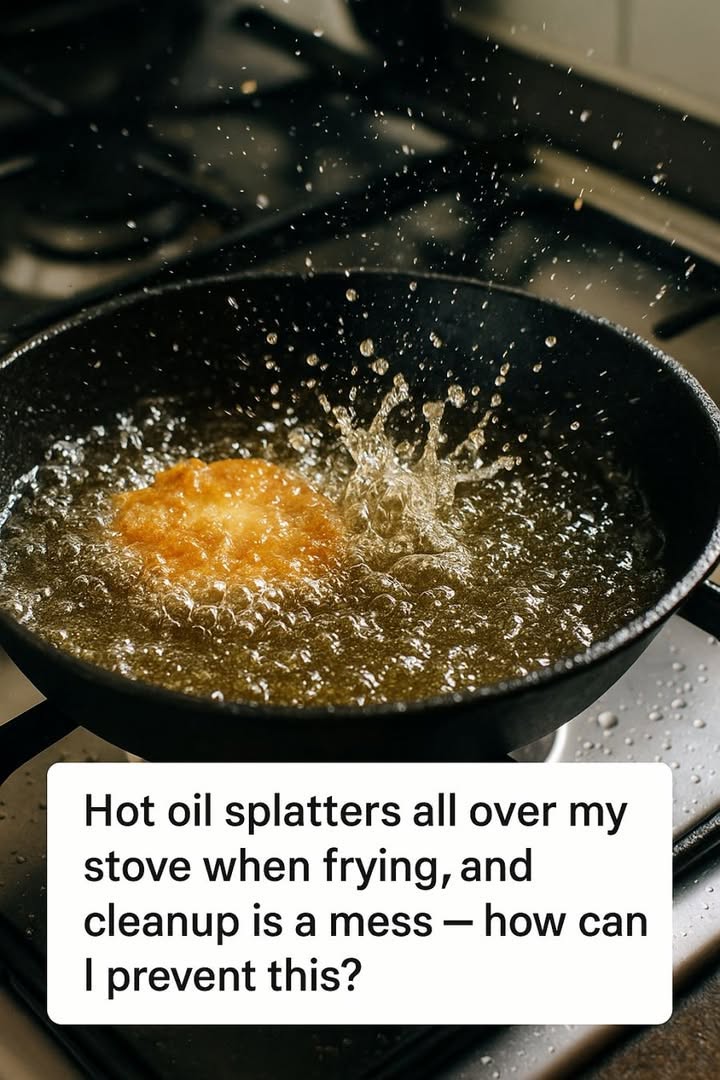
Frying is a beloved cooking method that delivers crispy, golden results that are hard to resist. However, as anyone who has ever stood over a sizzling pan knows, hot oil splatters can quickly turn your kitchen into a war zone, leaving you with burns and a sticky mess to clean up. Why does this happen? When moisture from the food contacts hot oil, it rapidly turns to steam, causing the oil to spatter.
Understanding the science behind these splatters is the first step to taming them. With the right techniques, you can enjoy perfectly fried foods without the headache of cleaning up a greasy stovetop. Here are several methods to help you prevent oil splatters and maintain a clean cooking space.
1. Start With Dry Ingredients to Eliminate Excess Moisture
Water and oil don’t mix, and when droplets of water hit hot oil, they cause violent splattering. Always start with dry ingredients. If you’re frying something like potatoes, make sure they’re dry before they hit the oil. Using a salad spinner can be an effective way to remove water from vegetables after washing.
For proteins, such as chicken or fish, ensure they are thawed and brought to room temperature. Ice crystals or condensation from the fridge will cause the oil to spatter. Allowing them to rest on a paper towel for a few minutes can help remove excess moisture.
2. Pat Proteins and Vegetables Thoroughly Dry Before Frying
For proteins, use paper towels to pat them dry thoroughly. This step is crucial whether you’re frying chicken, fish, or even tofu. The drier the surface, the less likely you are to experience dramatic oil splatters.
Similarly, with vegetables, especially those with high water content like zucchini or eggplant, pat them dry using a clean kitchen towel or paper towel. You can also let them air dry on a rack for 10 minutes before frying.
3. Use Light Breading or Coating to Create a Moisture Barrier
Breading or coating your food can act as a moisture barrier, preventing juices from escaping and reacting with the hot oil. A simple dredge in flour, or a more complex breading with egg and breadcrumbs, can make a significant difference.
For example, when frying chicken, first coat it in flour, then dip in beaten egg, and finally coat with breadcrumbs. This triple-layer coating not only enhances texture but also minimizes splatter.
4 Choose the Right Pan Size and Depth to Contain Splatters.
Using a deep pan can help contain oil splatters. A pan with high sides is ideal as it provides more space for oil to bubble and splatter without escaping.
Ensure that your pan is large enough to fit your food without overcrowding. This extra room helps prevent oil from being pushed up and out of the pan by displaced oil.
5. Control Oil Temperature to Reduce Violent Bubbling
Maintaining the right oil temperature is critical when frying. If your oil is too hot, it can cause excessive bubbling and splattering. Use a thermometer to monitor the oil temperature; for most frying, a range of 350°F to 375°F is ideal.
Lower temperatures will cook food more evenly and prevent it from burning on the outside while remaining raw inside. Adjust the heat as needed to maintain a consistent temperature.
For Complete Cooking STEPS Please Head On Over To Next Page Or Open button (>) and don’t forget to SHARE with your Facebook friends
ADVERTISEMENT

