
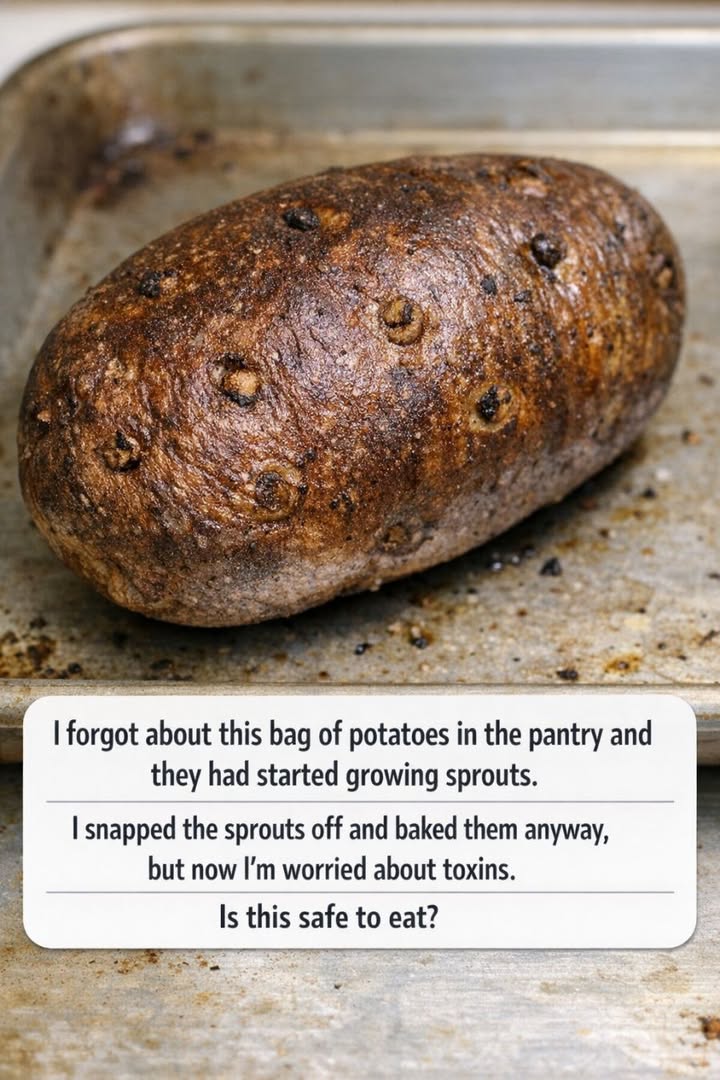
Baking or cooking potatoes does not significantly reduce solanine levels. Solanine is heat-stable, meaning it does not break down easily at the temperatures typically used in cooking. Therefore, baking, boiling, or frying potatoes will not eliminate the risk of toxicity from solanine if it is present in high concentrations.
To minimize the risk, it is crucial to start with potatoes that are not heavily sprouted or green. If in doubt, it’s safer to discard potentially toxic potatoes rather than relying on cooking to make them safe.
Baked potatoes on a tray in a home oven setting
8. Symptoms To Watch For If You Already Ate Sprouted Potatoes
If you have consumed sprouted potatoes and are concerned about solanine poisoning, watch for symptoms such as nausea, vomiting, diarrhea, stomach cramps, and headaches. In more severe cases, symptoms can include neurological effects such as dizziness, confusion, or hallucinations.
If you experience any of these symptoms after eating sprouted potatoes, it is advisable to seek medical attention, especially if symptoms persist or worsen. While solanine poisoning is rare, it is better to be cautious and get evaluated by a healthcare professional.
9. Safer Ways To Prep And Cook Slightly Sprouted Potatoes
If you choose to use slightly sprouted potatoes, take care to remove all sprouts and any green or discolored areas. Peel the potatoes to remove the skin, where solanine concentrations are highest. Cutting away any soft or damaged parts is also recommended.
After preparing the potatoes, cook them thoroughly. While cooking does not eliminate solanine, it ensures that the potatoes are safe from other microbial contaminants. Choose cooking methods that you enjoy, but ensure the potatoes are cooked through to enhance their palatability.
Hands peeling a potato after removing small sprouts
10. Smart Storage Habits To Prevent Sprouting In The First Place
To prevent potatoes from sprouting, store them in a cool, dark place with good ventilation. Avoid storing them in plastic bags, as this can trap moisture and promote sprouting. Instead, use paper bags or baskets that allow air circulation.
Keep potatoes away from onions, as the gases emitted by onions can increase sprouting in potatoes. Monitoring your potato supply and using older potatoes first can also help prevent sprouting and wastage.
Potatoes stored in a basket on a cool pantry shelf
11. When In Doubt: Simple Rules For Deciding To Eat Or Discard
If you’re unsure whether a sprouted potato is safe to eat, consider the extent of sprouting, any green coloration, and the overall texture and smell of the potato. When in doubt, it’s better to discard questionable potatoes to avoid any potential health risks.
Adopt the general rule of “better safe than sorry.” If a potato looks off or if you have any reservations about its safety, it’s best not to eat it. A good cook learns to be frugal, but also to trust her senses. By following these guidelines, you can enjoy potatoes safely and avoid the risks associated with consuming sprouted or spoiled potatoes.
ADVERTISEMENT

