
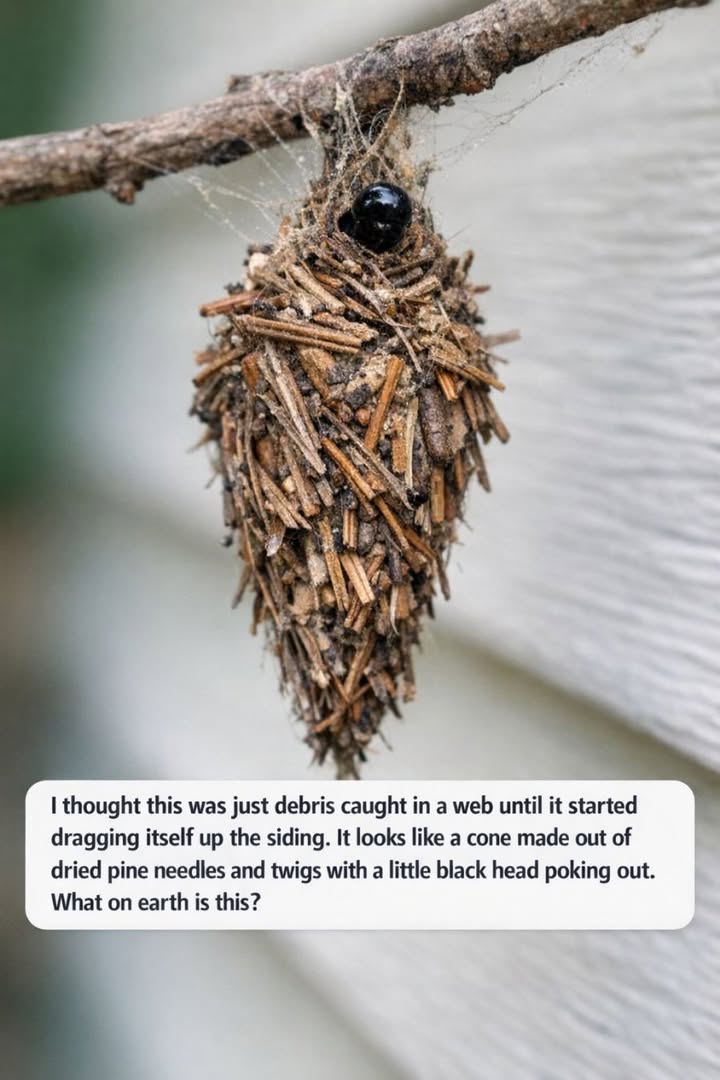
5. The Life Cycle: From Tiny Larva to Hidden Moth
The life cycle of a bagworm begins with the hatching of eggs in late spring to early summer. The larvae emerge and immediately begin constructing their bags. As they grow, they continue to fortify their protective cases, feeding on the foliage of their host plants.
After several months of growth, typically by late summer, the larvae enter a pupal stage within their bags. Male bagworms will eventually emerge as small, dark moths with transparent wings, seeking out females to mate. Female bagworms, however, remain in their bags, wingless and caterpillar-like, where they will lay their eggs and start the cycle anew.
6. Where Bagworms Live And Why They’re On Your Siding
Bagworms are found in a variety of habitats, primarily on trees and shrubs. They are particularly fond of coniferous trees such as cedars and junipers, but they can also be found on deciduous trees and ornamental plants. Their presence on your siding might be due to a nearby infestation or simply a convenient location for the larva to anchor its bag.
Bagworms are not particular about where they settle, as long as there is ample foliage to feed on. If your home is surrounded by trees or shrubs, especially those favored by bagworms, it is not uncommon to find them wandering onto structures in search of new feeding grounds.
7. Are Bagworms Dangerous To People, Pets, Or Homes?
Bagworms pose no direct threat to humans or pets. They do not bite, sting, or transmit diseases. Their primary impact is on the plants they infest, where they can cause significant damage if left unchecked.
In terms of structures, bagworms do not harm buildings or siding. Their presence may be unsightly, but they do not cause any structural damage. The primary concern with bagworms is their potential to defoliate and weaken trees and shrubs in your landscape.
8. The Real Threat: How Bagworms Damage Trees And Shrubs
Bagworms feed voraciously on the foliage of their host plants, and a significant infestation can lead to severe defoliation. This damage is most notable on coniferous trees, where the loss of needles can lead to branch dieback and, in severe cases, the death of the tree.
Deciduous trees are also at risk, though they are generally more resilient. However, repeated defoliation can weaken these plants, making them more susceptible to disease and other pests. In ornamental landscapes, bagworm damage can result in unsightly plants and reduced aesthetic value.
9. What To Do When You Find Bagworms On Your Property
If you notice bagworms on your property, it’s important to address the issue promptly. Handpicking the bags from plants and destroying them is an effective method for small infestations. This is best done in late fall or early spring before the eggs hatch.
For larger infestations, consider using biological control methods such as Bacillus thuringiensis (Bt), a naturally occurring bacterium that targets caterpillars without harming beneficial insects. Chemical insecticides are also an option, though they should be used with caution to minimize impact on non-target species.
10. Prevention Tips To Keep Bagworm Infestations In Check
Preventing bagworm infestations involves regular monitoring of your plants, especially those most susceptible to bagworm attacks. Pruning and removing infested branches can help reduce the population. Introducing natural predators, such as certain bird species, can also help keep bagworm numbers down.
Maintaining plant health through proper watering, fertilization, and mulching will also reduce stress on plants, making them less attractive to bagworms. Regular inspections during the growing season and prompt action at the first sign of bagworms can prevent small problems from becoming large infestations.
11. When To Call In The Pros For A Bagworm Problem
While many homeowners can manage bagworm infestations on their own, there are times when professional intervention is necessary. If you have a severe infestation that threatens the health of your trees or if the infestation covers a large area, it may be time to call in a pest control professional.
Professionals have access to more potent control methods and can provide tailored solutions that address the specific needs of your landscape. They can also offer advice on long-term prevention strategies to keep bagworms and other pests at bay.
ADVERTISEMENT

