
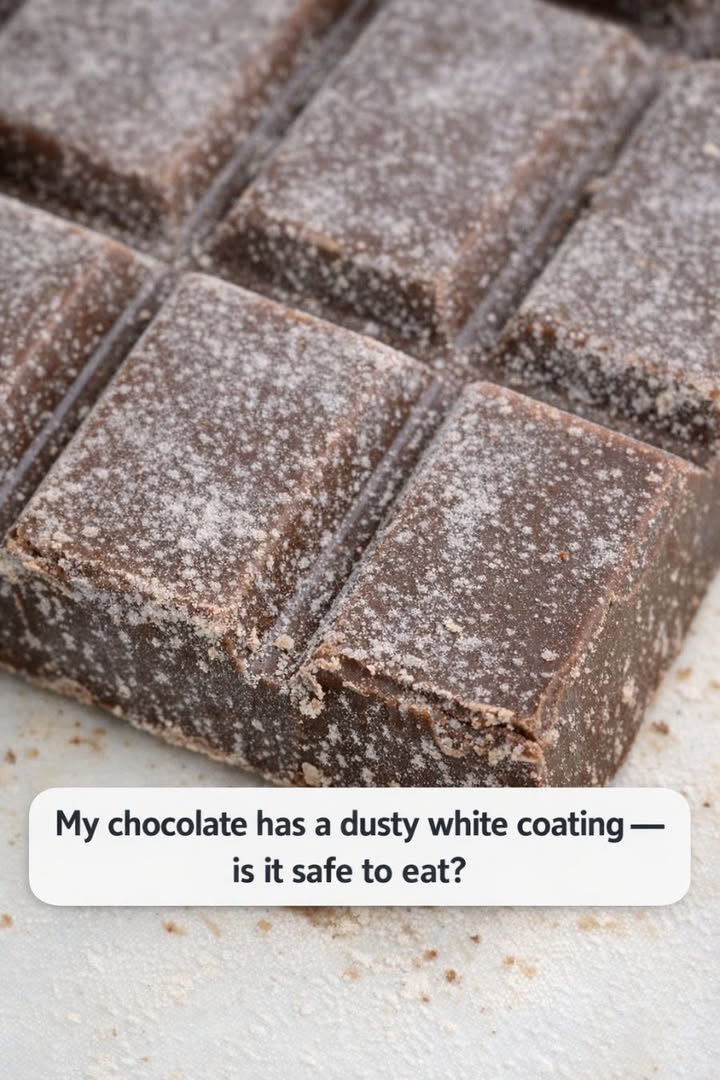
3. Is Bloomed Chocolate Actually Safe to Eat?
Yes, bloomed chocolate is safe to eat. The white coating does not indicate spoilage or contamination; rather, it is simply a result of the chocolate’s physical properties changing due to environmental factors. The flavor might be slightly altered, especially in the case of sugar bloom, which can impart a grainy texture, but the chocolate remains edible.
It’s important to distinguish bloom from mold, which is a different issue entirely. Bloom does not produce any off smells or significant color changes beyond the white coating, whereas mold will often have a distinctive odor and can appear in various colors.
4. How Bloom Affects Taste, Texture, and Quality
While bloomed chocolate is safe to eat, it may not provide the optimal chocolate experience. The main impact of bloom is on the texture and appearance of the chocolate. Fat bloom can make the chocolate appear dull and streaky, and it may disrupt the smooth texture that is characteristic of well-tempered chocolate.
Sugar bloom, on the other hand, can have a more pronounced effect on taste and mouthfeel. The recrystallized sugar can give the chocolate a gritty texture, which may be unpleasant for some. However, the actual taste of the chocolate remains largely unaffected, apart from the change in texture.
5. Common Reasons Your Chocolate Developed a White Coating
Chocolate bloom can occur due to several common factors. One primary reason is improper storage, particularly in environments with fluctuating temperatures or high humidity. For example, storing chocolate in a kitchen cabinet near the stove or in a refrigerator where it can absorb moisture can result in bloom.
Another common cause is handling chocolate with wet or warm hands, which can introduce moisture or heat to the chocolate surface, leading to sugar or fat bloom. Additionally, if chocolate is exposed to direct sunlight or stored near a heat source, it may develop bloom as the cocoa butter melts and resolidifies unevenly.
6. How to Tell Bloom Apart From Mold or Spoilage
To differentiate bloom from mold or spoilage, examine the chocolate closely. Bloom is typically a uniform, whitish coating that does not significantly alter the chocolate’s smell. Mold, however, can appear in various colors, such as green, blue, or black, and may have a fuzzy texture. Mold also tends to emit an off-putting odor, unlike bloom.
If your chocolate has a strange smell or visible mold, it’s best to discard it. However, if it only has a white coating and no unusual odor, it’s likely just bloom and safe to consume.
For Complete Cooking STEPS Please Head On Over To Next Page Or Open button (>) and don’t forget to SHARE with your Facebook friends
ADVERTISEMENT

