
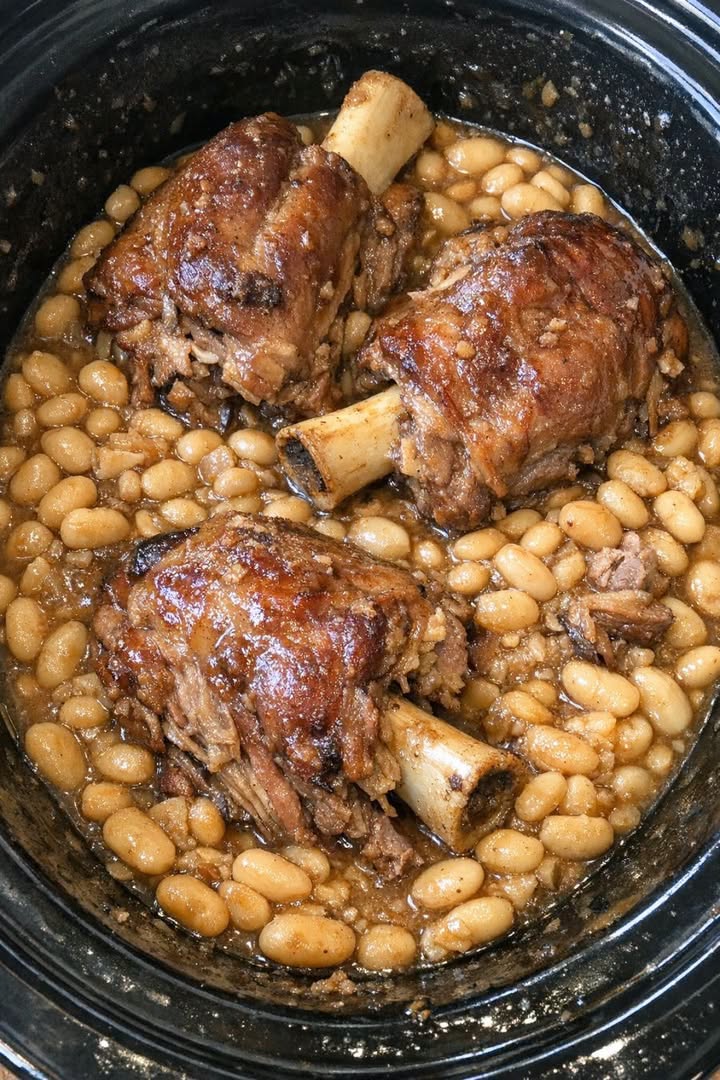
To stay true to the Depression-era spirit, this recipe keeps to four basic ingredients, but there are many small ways to adapt it while still leaning on economy and practicality.
If you want a bit more savoriness without adding extra ingredients, brown the shanks very deeply and let any browned bits on the pan’s bottom cook off into the water before adding it to the slow cooker; those caramelized bits intensify flavor. If you have access to other inexpensive cuts, pork hocks or neck bones can be swapped in for some or all of the shanks, though shanks provide the best combination of meat, bone, and collagen for that glossy sauce.
For a slightly smokier version, you can replace part of the salt with a small piece of smoked pork (like a ham hock) in place of one shank, but this technically adds an ingredient. To make this more broth-like, add up to 2 extra cups of water and serve as a soup over day-old bread. For a thicker, almost baked-bean texture, cook uncovered on HIGH at the end until the liquid reduces to your liking.
Food safety and practicality tips: Always rinse and pick through dried beans to remove any debris or tiny stones.
For the most reliable soft texture, avoid very old beans, which may never fully soften. Because this recipe uses dried beans, do not cook them on the WARM setting; use LOW or HIGH so they reach a safe temperature. If you live at high altitude, beans can take longer to cook; plan on the upper end of the cooking time and check for tenderness.
Cool leftovers quickly by transferring them to shallow containers, and refrigerate within 2 hours to minimize bacterial growth. Reheat leftovers to a gentle simmer, stirring so the beans don’t scorch on the bottom.
If any portion smells off, looks unusually foamy or slimy, or has been left at room temperature for more than 2 hours, it’s safest to discard it. Finally, be cautious when removing the shanks from the hot liquid—the bones can slip out unexpectedly from the very tender meat, so use tongs and a wide spoon or spatula for support.
ADVERTISEMENT

