
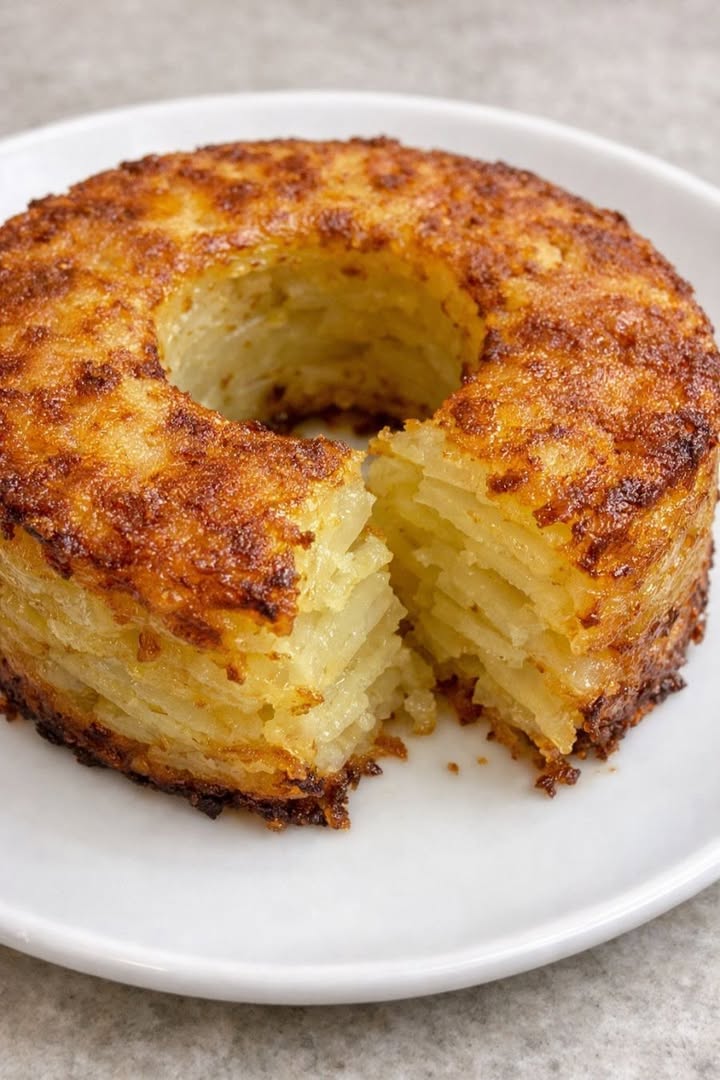
Freshly unmolded potato ring on a serving plate
If desired, dab away any excess butter or cream that may pool around the base with a paper towel for a cleaner presentation. Slice the ring into wedges using a sharp knife with a gentle sawing motion, and serve immediately while the exterior is still crisp and the interior is tender and layered.
Variations & Tips
For a subtly different character, you can swap Yukon Gold potatoes for russets: Yukons give a slightly creamier, more buttery interior, whereas russets create a fluffier, almost soufflé-like texture inside the crisp shell.
If you want a more pronounced crust, bake the ring for the last 10 minutes at 400°F (200°C), watching closely so the edges don’t over-brown. A small pinch of freshly grated nutmeg in the cream mixture adds a classic French note without introducing extra ingredients beyond basic pantry spices.
Slice of potato ring showing layered interior
For a make-ahead option, you can bake the ring up to a day in advance, cool completely, cover, and refrigerate; reheat in the mold, covered with foil, at 325°F (165°C) until warmed through, then unmold right before serving. Always handle the hot mold and baking sheet with thick oven mitts to avoid burns, and be cautious when removing the foil, as steam will escape.
If using a mandoline for slicing, use the hand guard or a cut-resistant glove to protect your fingers. Leftovers should be cooled promptly, covered, and refrigerated within two hours; reheat thoroughly until steaming hot before serving again.
ADVERTISEMENT

