
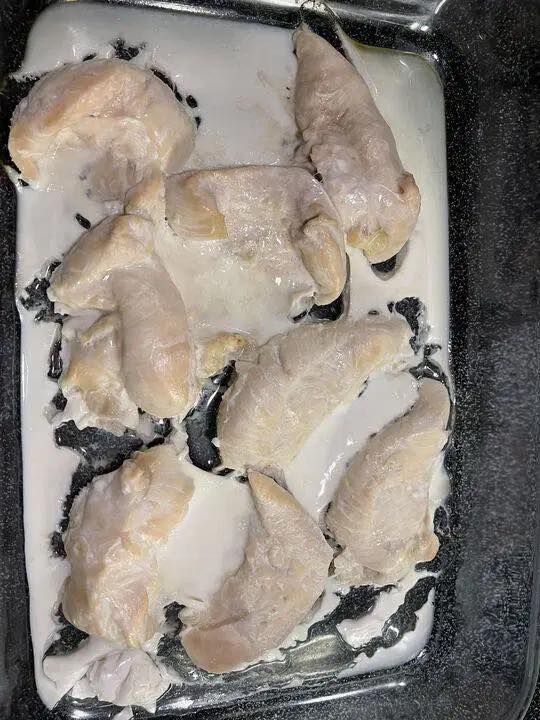
Cooking boneless, skinless chicken breasts, which are lean and protein-heavy. “It’s really common when cooking at high heat without much in the way of liquid or fat, like if you’re baking plain, boneless, skinless chicken breasts,” Curlett explained.
Using high-heat methods such as baking, roasting, or pan-searing. Rapid cooking causes proteins to tighten quickly, forcing out more moisture.
Cooking chicken that hasn’t fully thawed. Freezing damages muscle fibers, and once thawed, they release extra moisture and protein during cooking.
Allowing chicken to rest after cooking helps redistribute juices back into the meat instead of letting them leak out immediately.
Is It Safe to Eat?
Yes — the white substance is completely safe. It’s just cooked protein and water and doesn’t affect the flavor or quality of the chicken.
However, if the raw chicken smelled bad, felt slimy, or showed unusual discoloration before cooking, those are signs of spoilage. In that case, it’s best to throw it away. The white goo alone is not a warning sign.
How to Reduce the White Residue
If you’d prefer your chicken to look a bit more appetizing, there are a few ways to limit the appearance of the white protein:
Cook at lower temperatures. Baking at 350°F (175°C) instead of 400°F (205°C) allows proteins to coagulate more slowly.
Brine the chicken. Soaking it in saltwater for 30 minutes to an hour helps retain moisture and reduces protein loss.
Sear before baking. Browning the chicken in a hot pan first can help lock in juices.
Let chicken come to room temperature. Cooking it straight from the fridge — or partially frozen — increases protein leakage.
Choose higher-quality chicken. Factory-processed chicken often contains added water, making the white goo more noticeable. Organic or air-chilled chicken usually releases less moisture.
While you can minimize it, some protein leakage is normal unless you’re cooking very gently.
The Bottom Line
That white substance coming out of your chicken is just protein and water reacting to heat. It’s natural, harmless, and safe to eat. Even if it’s not the most attractive sight, it won’t affect the taste or safety of your meal.
ADVERTISEMENT

