
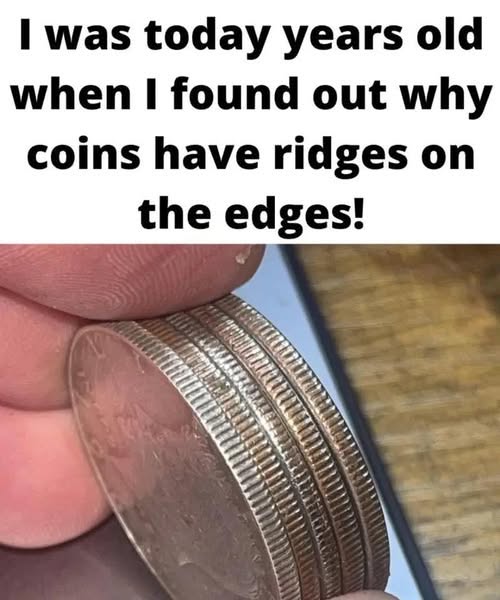
What began as a defense against theft has evolved into a tool for inclusion.
Why Some Coins Are Still Smooth
Not all coins have ridges. In many currencies, lower-value coins such as pennies or nickels are left smooth.
This is not an oversight. It reflects economic logic.
Since these coins contain little to no precious metal, there was historically no incentive for criminals to clip them. Altering them wouldn’t produce any meaningful gain. As a result, the added security of ridging was unnecessary.
Instead, smooth edges became a silent indicator of lower intrinsic risk value, while ridged coins were reserved for higher-value denominations.
Even today, that distinction remains part of many monetary systems.
A Design You Rarely Notice—but Always Use
What makes coin ridges fascinating is not just their history, but their invisibility in daily life. Most people never consciously think about them. They are felt more often than they are observed, and used more often than they are acknowledged.
Yet they represent one of the earliest forms of embedded financial security.
Long before digital encryption, blockchain systems, or fraud detection algorithms, there was a simple physical solution: change the shape of the object so that tampering becomes obvious.
It’s a reminder that security doesn’t always need to be complex. Sometimes it just needs to be unavoidable.
ADVERTISEMENT

