
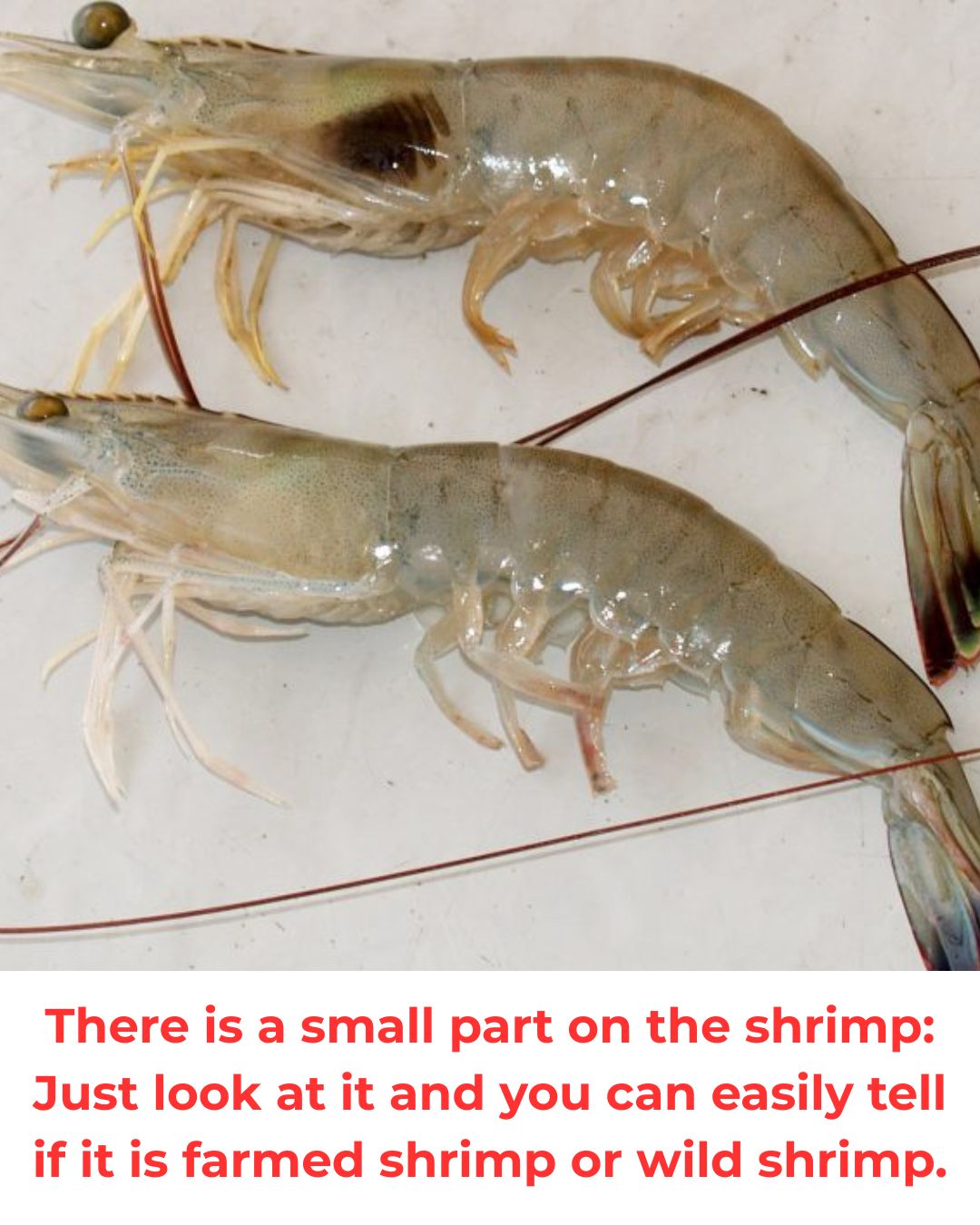
There Is a Small Part on the Shrimp: Just Look at It and You Can Easily Tell If It Is Farmed or Wild Shrimp
Shrimp lovers know that flavor, texture, and freshness can vary widely—but did you know there’s a small detail on the shrimp itself that can help you make a good guess about whether it was wild-caught or farm-raised? While no single visual sign guarantees 100% accuracy, chefs, seafood vendors, and experienced home cooks often look at certain features to understand how the shrimp was raised.
Understanding these differences helps you choose better-tasting shrimp, cook more confidently, and make informed decisions at the market—especially when labels are unclear or when you’re buying shrimp whole and unprocessed.
A Quick Reality Check
Before diving in:
No single physical feature can guarantee whether a shrimp is wild or farmed. But several consistent visual clues can help you make a strong, educated guess. The key is to look at the shell, the legs, and the overall coloration—especially a small, often-overlooked part: the legs (pleopods).
The Small Shrimp Part That Reveals a Lot: The Legs (Pleopods)
Shrimp legs can tell surprising amounts about their environment.
1. Color of the Legs
Wild shrimp often have darker, more pigmented legs—brownish, reddish, or deep pink.
This pigmentation forms naturally because wild shrimp feed on varied diets and live in sun-exposed waters.
Farmed shrimp frequently have paler legs, sometimes nearly translucent.
Controlled environments and standardized feed do not create as much natural pigmentation.
2. Condition of the Legs
Wild shrimp’s legs are usually leaner and more muscular, thanks to constant movement in open water.
Farmed shrimp’s legs may appear thicker or softer, reflecting less swimming and more consistent feeding.
This small visual difference is the first indicator many seafood experts check.
Other Helpful Indicators (Used Together With the Leg Test)
1. Shell Color and Spots
Wild shrimp often have:
Slightly mottled shells
Natural spots or irregular color patterns
Deeper coloration depending on habitat
Farmed shrimp tend to have:
More uniform shell color
Fewer natural markings
A lighter overall tone
2. Shell Firmness
Wild shrimp usually have:
Firmer, denser shells
Farmed shrimp are sometimes:
Softer or more pliable, depending on farming conditions
3. Odor
While both should smell clean and ocean-fresh:
Wild shrimp may have a brinier, more pronounced sea smell
Farmed shrimp often smell milder
4. Size Uniformity
Farmed shrimp:
Are usually very uniform in size because of controlled feeding
Wild shrimp:
Often vary in size, even within the same batch
Why Wild and Farmed Shrimp Look Different
Diet
Wild shrimp eat small fish, algae, plankton, and natural organisms
Farmed shrimp are fed formulated pellets or commercial feed
This affects pigment (especially carotenoids like astaxanthin).
Environment
Wild shrimp swim constantly → more muscle tone
Farmed shrimp live in crowded ponds or tanks → softer shells and less varied pigment
Sunlight Exposure
Wild shrimp get natural UV exposure that affects shell and leg coloration
Farmed shrimp often live in shaded or artificial environments
Which Is Better—Wild or Farmed?
Both can be great choices when sourced responsibly.
Wild Shrimp
Pros:
Often stronger flavor
Firmer texture
More natural pigmentation
Cons:
More expensive
Seasonal availability
Environmental impact varies by region
Farmed Shrimp
ADVERTISEMENT
