
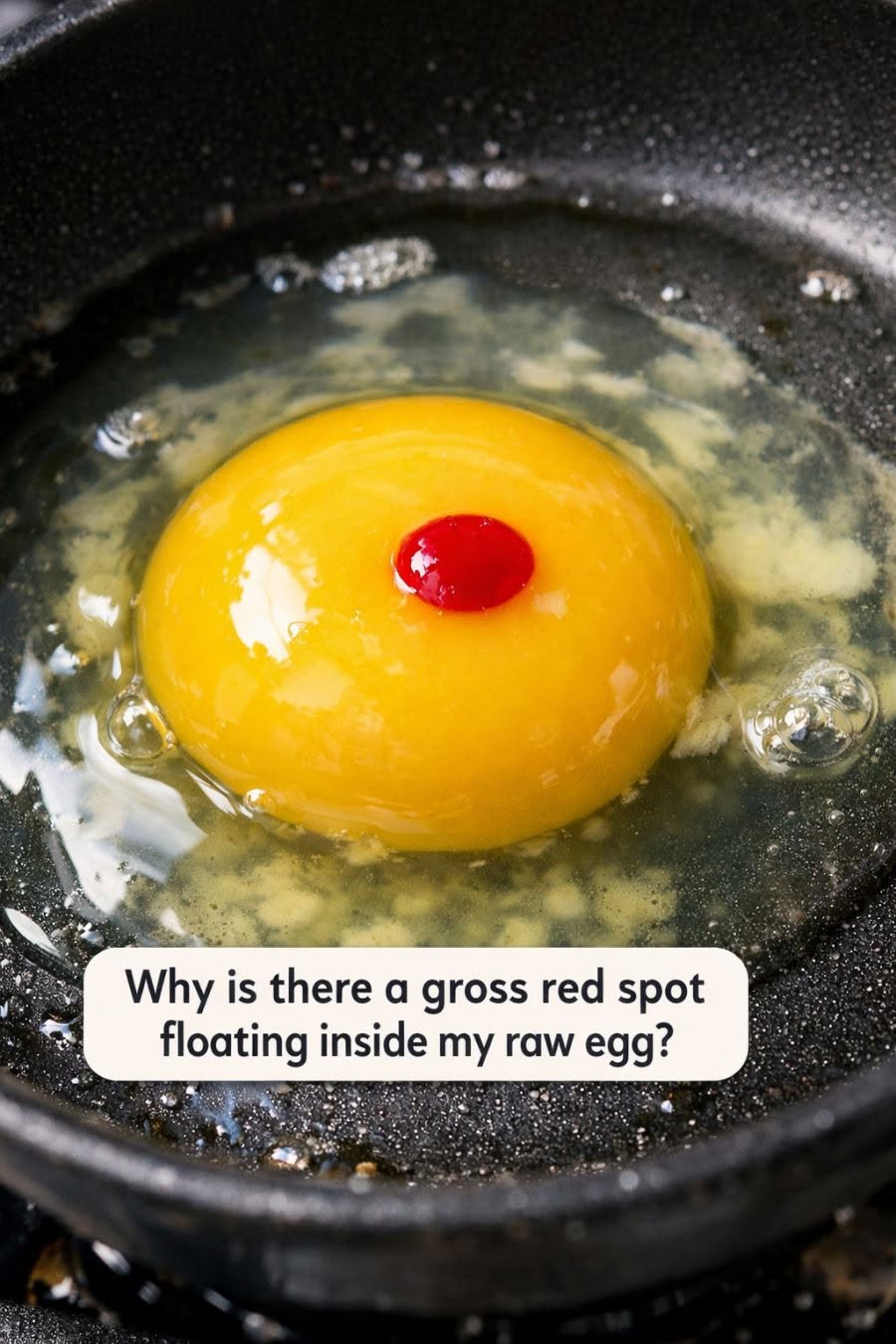
Commercial egg producers use a process called candling, where eggs are passed over a bright light to check for internal defects like blood spots. Eggs with visible defects are typically removed from the batch, which is why blood spots are rarely seen in store-bought eggs. However, some may still slip through the process.
8. Why Backyard and Farm-Fresh Eggs Show More Red Spots
Eggs from backyard chickens or small farms are less likely to go through the candling process, so blood spots are more commonly encountered. Additionally, hens in these environments may have different dietary or living conditions, which can influence the frequency of blood spots.
9. How to Remove a Blood Spot (And When You Don’t Need To)
If you prefer not to consume the blood spot, it can easily be removed with the tip of a knife or a spoon. However, since blood spots are harmless, there’s no need to remove them if they don’t bother you. In many dishes, the spot will blend in during cooking, becoming unnoticeable.
10. What Blood Spots Reveal About Hen Health and Welfare
The occasional appearance of a blood spot is normal and doesn’t necessarily indicate poor hen health. However, frequent occurrences can point to nutritional deficiencies or stress in the hen’s environment. Ensuring hens have a balanced diet and a stress-free living condition can minimize the occurrence of blood spots.
11. When to Worry: Strange Colors, Smells, and Other Warning Signs
While blood spots are safe, other signs such as an unusual smell, a discolored yolk, or a watery egg white should raise concerns. These can indicate spoilage or bacterial contamination. Eggs should be stored properly, and any that show these warning signs should be discarded to avoid foodborne illness.
ADVERTISEMENT

