
TIA: Symptoms resolve completely within minutes to hours (usually less than 24 hours). No permanent brain damage. But it’s a major warning sign.
Stroke: Symptoms persist. Brain cells die. Permanent damage is possible.
Why TIAs are so dangerous: A TIA tells you that there is a problem with your blood vessels. Another clot—perhaps a larger one—could form at any time. The risk of a major stroke is highest in the first 48 hours after a TIA.
The good news: TIAs are treatable. And with prompt medical care, you can dramatically reduce the risk of a future stroke.
But you have to recognize the symptoms first.
The 5 Warning Signs of a Mini Stroke in Seniors
Let me give you the FAST acronym plus one more essential sign.
1. Facial Drooping (One Side of the Face)
What it looks like: One side of the face sags or feels numb. The person’s smile may be uneven. One eye may not close completely.
What to do: Ask the person to smile. Is the smile uneven? Does one side of the mouth not lift as high as the other?
Why it happens: The part of the brain that controls facial muscles (the facial nerve) is affected by reduced blood flow.
In a TIA: This symptom comes on suddenly and resolves within minutes or hours. It may be subtle—a slight droop that you almost miss. Don’t ignore it.
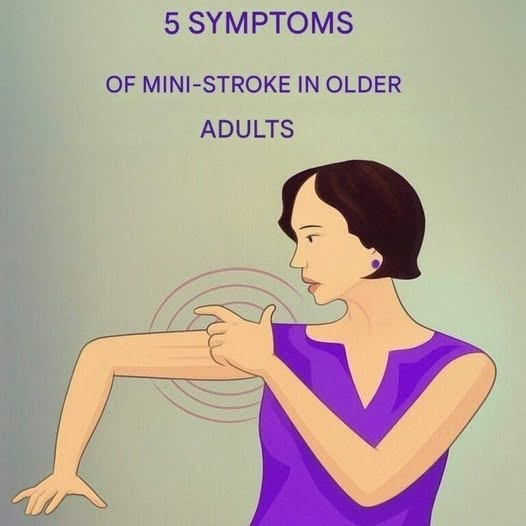
2. Arm Weakness or Drifting (One Side of the Body)
What it looks like: Sudden weakness, numbness, or heaviness in one arm or leg. The person may drop things, have trouble gripping, or feel that one side of their body is “heavy.”
What to do: Ask the person to raise both arms. Does one arm drift downward? Can they keep both arms raised for 10 seconds?
Why it happens: The motor cortex (which controls movement) is affected.
In a TIA: The weakness may be subtle. They might say their arm “feels funny” but still have some strength. Don’t dismiss it.
3. Speech Difficulty (Slurred, Jumbled, or Incomprehensible)
What it looks like: The person’s speech is slurred (like they’re drunk). Or they can’t find the right words. Or they speak in jumbled sentences that don’t make sense. Or they can’t understand what you’re saying.
What to do: Ask the person to repeat a simple sentence: “The sky is blue.” Can they say it clearly? Do they understand the request?
Why it happens: The language centers of the brain (usually on the left side) are affected.
In a TIA: The speech problem may come and go. One minute they’re fine. The next, they’re struggling. This is still a TIA. Still a warning.
4. Time to Call Emergency Services (The Most Important Step)
For Complete Cooking STEPS Please Head On Over To Next Page Or Open button (>) and don’t forget to SHARE with your Facebook friends
ADVERTISEMENT

