
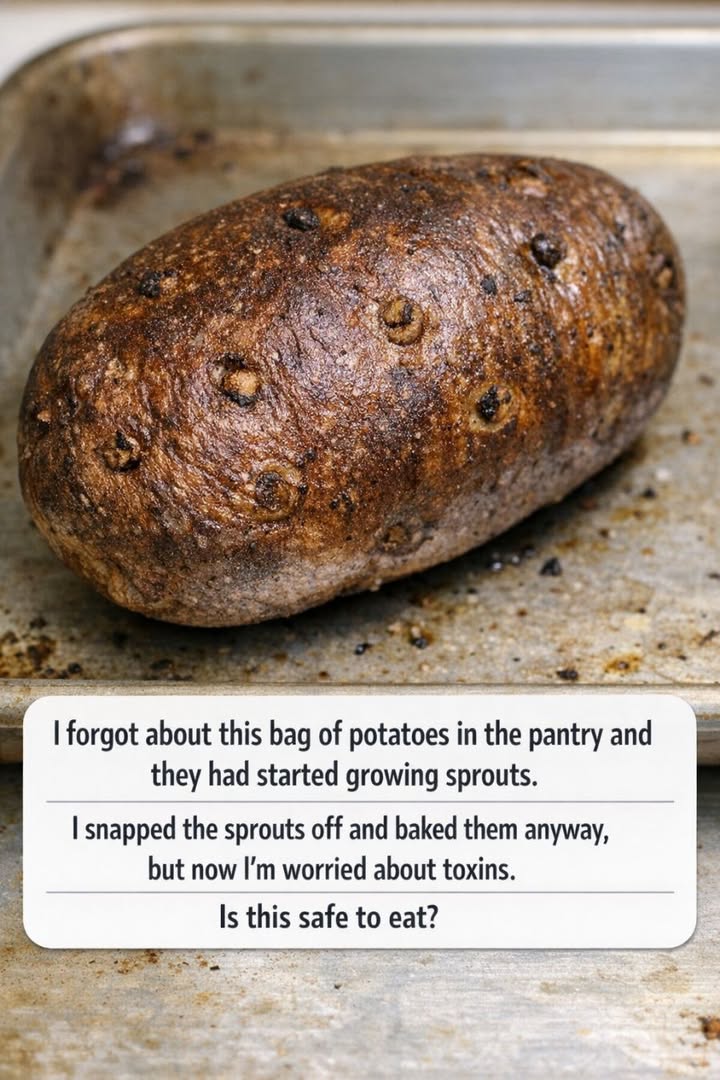
Close view of potato eyes beginning to sprout
2. The Truth About Solanine And Potato Toxins
Potatoes naturally contain a glycoalkaloid called solanine, which serves as a defense mechanism against pests and diseases. While solanine is present in all potatoes, its concentration can increase in response to light exposure or physical damage. Typically, the levels of solanine in potatoes are low and not harmful. However, when potatoes sprout or turn green, solanine levels can rise to potentially toxic levels.
High solanine consumption can lead to symptoms such as nausea, vomiting, and neurological issues. The toxic dose of solanine is estimated to be 2-5 mg per kg of body weight, meaning that a 70 kg person would need to ingest 140-350 mg of solanine to experience toxic effects. In practical terms, this would require consuming a significant amount of green or heavily sprouted potatoes.
3. Are Sprouted Potatoes Always Unsafe To Eat?
Not all sprouted potatoes are unsafe to eat, but caution is advised. The safety of sprouted potatoes largely depends on the extent of sprouting and any accompanying changes in the potato’s color or texture. If the sprouts are small and the potato is otherwise firm and not green, it is generally safe to remove the sprouts and consume the potato.
However, if the potato has extensive sprouting, soft spots, or green patches, it is best to err on the side of caution and discard it. These signs suggest a higher concentration of solanine and other glycoalkaloids, which could pose a health risk if consumed.
Firm potatoes with tiny sprouts beside a peeling knife
4. How Much Sprouting Is Too Much? Visual Red Flags To Check
A few small sprouts on a potato are typically safe, provided you remove them before cooking. However, if the sprouts cover a significant portion of the potato, it indicates advanced growth and possibly higher toxin levels. Visual red flags include multiple large sprouts, extensive greening of the potato skin, and soft or shriveled spots on the potato.
If the potato has more sprout than flesh or feels soft and spongy, it is beyond salvaging. These conditions not only suggest elevated toxin levels but also a degradation in quality and taste, making the potato less desirable for consumption.
Heavily sprouted green potato showing clear warning signs
5. Does Snapping Off The Sprouts Make The Potato Safe Again?
Removing the sprouts from a potato can help reduce the risk of consuming increased levels of solanine. By snapping off the sprouts and discarding them, you remove the primary source of concern. However, this does not reduce solanine levels that may have developed in the potato flesh itself if the tuber has also turned green or has extensive sprouting.
While removing sprouts can make the potato safer to eat, it’s important to assess the overall condition of the potato. If there are no additional signs of spoilage or greening, the potato can be cooked and consumed safely. However, caution should be exercised if there is any doubt about the potato’s safety.
6. Green Patches, Soft Spots, And Odd Flavors: When To Toss The Potato
Green patches on a potato indicate increased solanine levels. The chlorophyll that gives the green color is not harmful, but its presence often accompanies higher concentrations of glycoalkaloids like solanine. If you notice green patches, it’s best to cut them off or, if they are extensive, discard the potato entirely.
Soft spots and an off-putting smell or flavor are also signs that a potato has gone bad. These changes can indicate spoilage or microbial growth, making the potato unsafe to eat. If the potato exhibits any of these characteristics, it is best to throw it away.
Potato with green skin and trimmed spoiled areas on a board
Potato with green skin and trimmed spoiled areas on a board
7. Does Baking Destroy Solanine Or Other Potato Toxins?
For Complete Cooking STEPS Please Head On Over To Next Page Or Open button (>) and don’t forget to SHARE with your Facebook friends
ADVERTISEMENT

