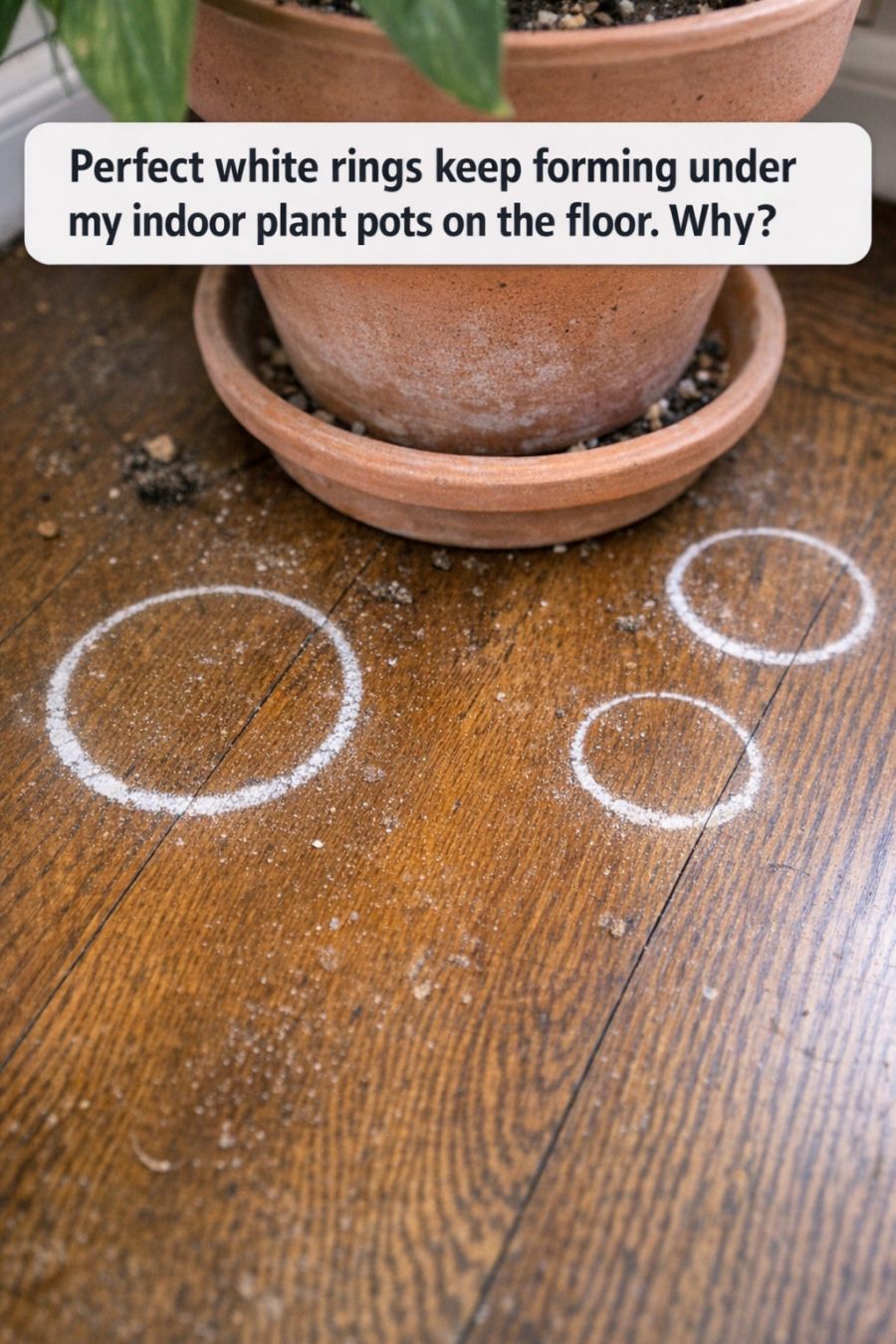
Sealed floors, such as those with a polyurethane finish or glazed tiles, are less likely to absorb moisture. While mineral rings can still form, they are generally easier to clean as the minerals remain on the surface.
7. When Mold, Mildew, Or Efflorescence Join The Mix
In damp conditions, the rings may not just be mineral deposits but can also involve mold or mildew growth. These fungi thrive in moist environments, and if water continuously seeps out of plant pots, it can create a perfect breeding ground for them.
Efflorescence, the white powdery substance that can appear on masonry surfaces, is another phenomenon that can occur. It forms when water carrying soluble salts moves through a porous material and evaporates, leaving the salts behind. In the context of plant pots, this can happen if the pots are placed on unsealed stone or concrete surfaces.
8. How To Safely Remove Existing White Rings From Your Floor
To remove white rings, start by gently scrubbing the area with a mixture of vinegar and water, which can help dissolve mineral deposits. For more stubborn stains, a paste made from baking soda and water can be applied. Gently rub the paste into the stain and then wipe it away with a damp cloth.
If the rings are on a porous surface and have penetrated deeper, you may need to use a more specialized cleaner or consider lightly sanding the area if it’s wood. Always test cleaning solutions on an inconspicuous area first to ensure they do not damage the flooring.
9. Simple Potting And Watering Tweaks To Prevent Future Rings
To prevent future white rings, consider using distilled or rainwater for your plants instead of hard tap water. This reduces the number of minerals introduced to the soil. Adjust your watering habits to ensure you are not overwatering, and allow the top inch of soil to dry out between waterings.
Improving soil drainage by adding materials like perlite or sand can also help. Additionally, repotting your plants with fresh soil every couple of years can prevent mineral buildup.
10. Protective Trays, Saucers, And Barriers That Actually Work
Using trays or saucers under your pots can catch excess water and mineral runoff before it reaches the floor. Look for models with raised platforms or ridges that keep the pot elevated above collected water, allowing for evaporation without direct contact with the pot.
There are also waterproof mats and protective barriers available that can be placed under plant pots. These can be particularly useful for larger plants or those that require frequent watering.
11. When White Rings Signal A Bigger Plant Or Home Issue
In some cases, persistent white rings can indicate an issue with the plant’s health or your home’s humidity levels. If you notice other symptoms in your plants, such as yellowing leaves or stunted growth, it may be time to reassess your care routine or the plant’s environment.
Furthermore, if mold or mildew accompanies the white rings, it might suggest that your home has excessive humidity or poor ventilation. Addressing these environmental factors can not only prevent white rings but also improve the overall health of your indoor space.