
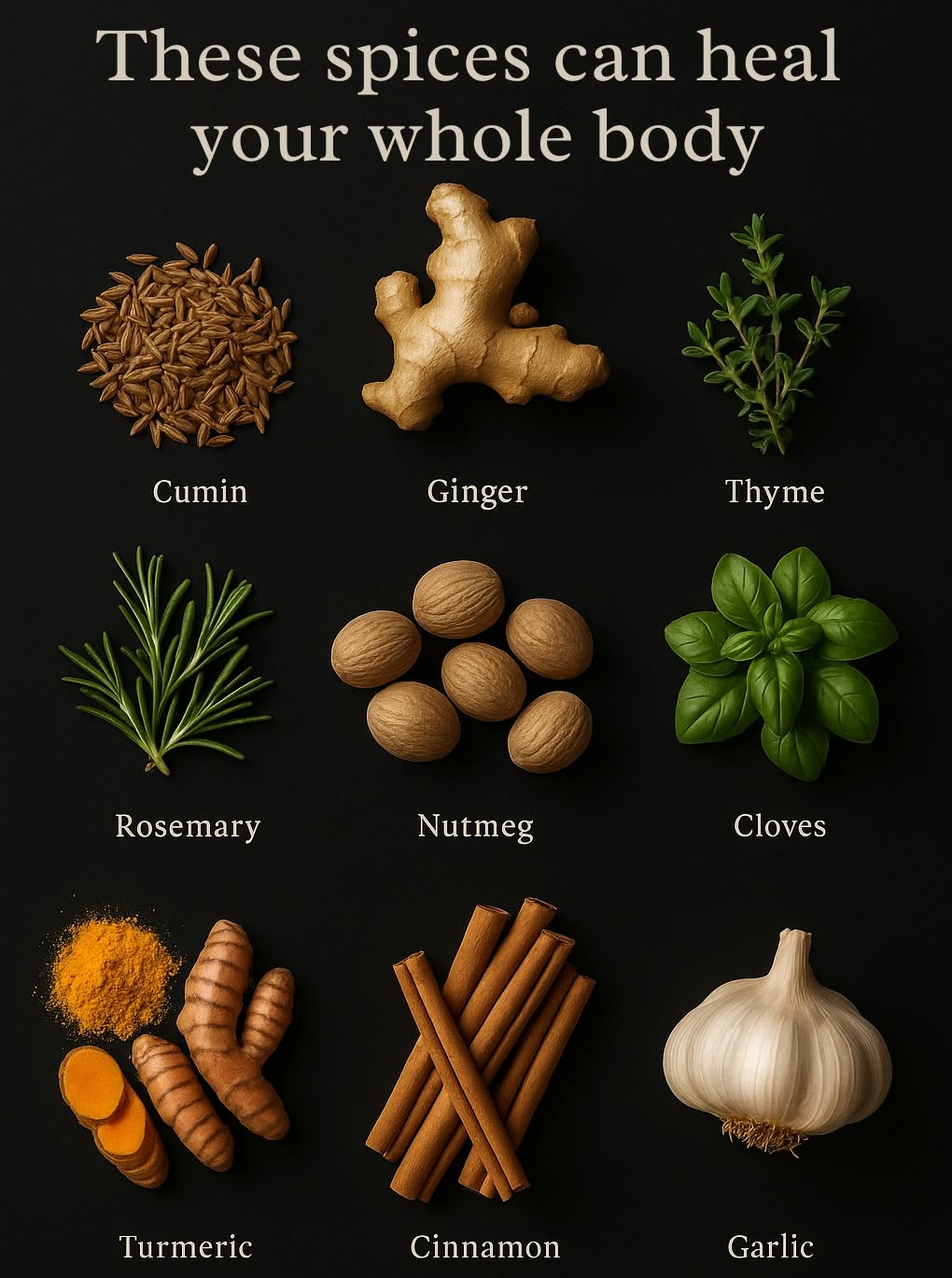
6. Turmeric – The Golden Healer
Turmeric, with its vibrant yellow hue, owes its healing powers to a compound called curcumin. Known for its strong anti-inflammatory and antioxidant effects, turmeric helps reduce inflammation in the body and may alleviate symptoms of arthritis, metabolic syndrome, and even depression. It’s one of the most researched medicinal spices in the world.
7. Ginger – The Stomach Soother
Ginger is widely recognized for its ability to ease nausea, whether from motion sickness, morning sickness during pregnancy, or chemotherapy. It also has anti-inflammatory effects and can help with indigestion, menstrual pain, and muscle soreness.
8. Nutmeg – A Natural Blood Pressure Regulator
Nutmeg contains essential minerals like potassium and magnesium, which help regulate blood pressure and support heart health. It’s also known for its calming effects and may help with sleep and digestion when consumed in small amounts.
9. Rosemary – Fuel for the Brain
With its pine-like aroma, rosemary is more than just a flavorful herb. It’s been associated with improved memory and concentration. Some studies suggest that compounds in rosemary may help protect brain tissue from aging and neurodegeneration. It’s also a powerful antioxidant and antimicrobial agent.
10. Thyme – A Herbal Cough Suppressant
Thyme is a natural expectorant that can help relieve coughs and chest congestion. Rich in vitamin C and other immune-boosting nutrients, thyme has been used for centuries to treat respiratory infections and soothe sore throats.
Final Thoughts:
Incorporating these spices into your daily meals not only enhances flavor but also boosts your overall well-being. Whether you sprinkle cinnamon on your oatmeal, sip ginger tea, or cook with garlic and rosemary, these healing spices bring powerful benefits to your table. As always, moderation is key—and for any chronic health concerns, be sure to consult a healthcare provider.
ADVERTISEMENT

