
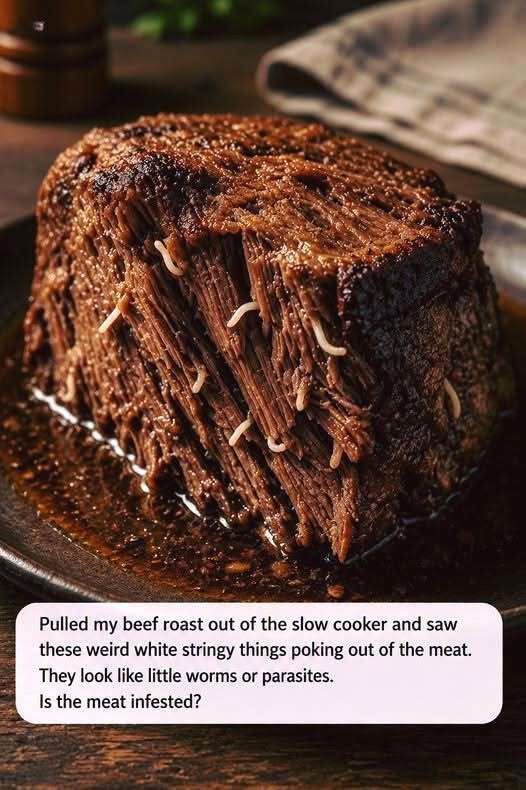
When you lift the lid of your slow cooker after hours of anticipation, you expect a rich, comforting aroma and a perfectly tender beef roast ready to fall apart at the touch of a fork. Instead, you may occasionally encounter something unexpected: pale, stringy formations woven through the meat that can look unsettling at first glance. For many home cooks, this moment triggers immediate concern, as the appearance resembles something unnatural or even harmful
However, what you are observing is almost always a completely normal and scientifically explainable part of the cooking process. Beef is not a uniform substance. It is a complex structure composed of muscle fibers, fat, water, and connective tissue. One of the most important components of that connective tissue is collagen, a strong, fibrous protein that binds muscle together and provides structure to the animal’s muscles during life. In raw meat, collagen is tough and resistant to chewing, which is why certain cuts of beef require long, slow cooking methods to become tender and enjoyable.
Slow cooking is specifically designed to transform these tougher cuts into soft, flavorful meals. When beef is cooked at low temperatures over several hours, the collagen begins to break down through a process known as hydrolysis. During this transformation, collagen gradually converts into gelatin, a soft, moisture-rich substance that enhances the texture and juiciness of the meat. This is one of the key scientific reasons slow-cooked beef becomes so tender and flavorful compared to quickly cooked cuts.
As this breakdown occurs, the structure of the meat changes visibly. The connective tissue, which once held the muscle fibers tightly together, starts to separate and loosen. In some cases, these collagen strands become visible as thin, pale, thread-like structures that appear to run through or emerge from the meat. Because of their appearance, they can easily be mistaken for parasites or foreign organisms, especially when seen for the first time.
It is important to understand that in properly sourced and inspected beef, such appearances are not a sign of contamination. Modern meat production systems include strict safety regulations, veterinary inspections, and quality control processes designed to eliminate infected or unsafe products before they ever reach consumers. As a result, parasitic contamination in commercially sold beef is extremely rare in many countries with regulated food industries.
The visual confusion arises primarily from perception rather than reality. Cooked collagen has a soft, translucent, and sometimes slightly glossy appearance. When it separates from muscle fibers, it can form irregular strands that resemble small threads or fibers. These strands are not solid organisms; rather, they are softened structural proteins that have changed form due to heat and moisture.
For Complete Cooking STEPS Please Head On Over To Next Page Or Open button (>) and don’t forget to SHARE with your Facebook friends
ADVERTISEMENT

